AUTHORITATIVE IN PRINT.
OUT OF DATE THE DAY IT SHIPS.
Platforms


Awards


Work > Institute of Public Administration
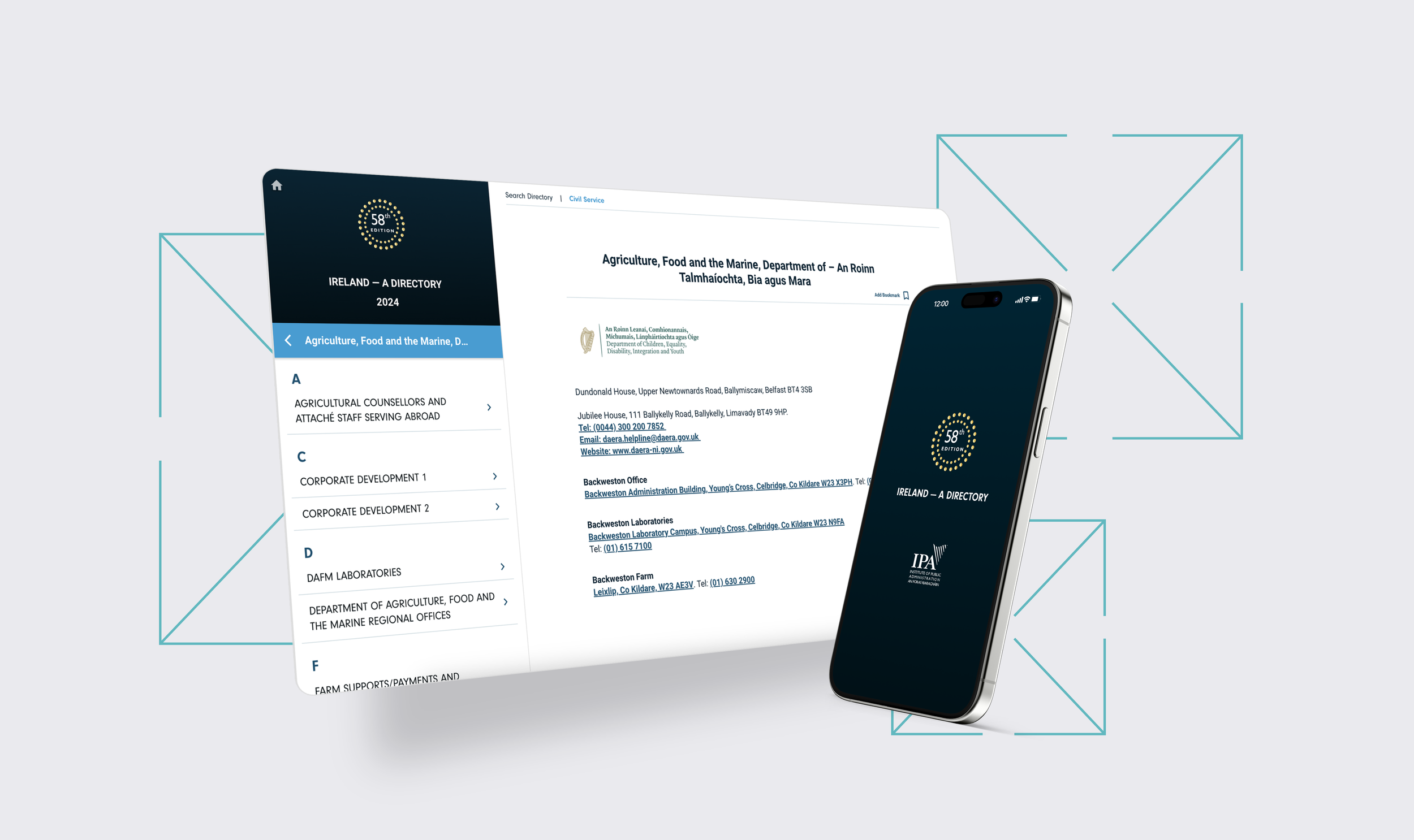
The Institute of Public Administration (IPA) is Ireland's only public-service development agency. For more than five decades they had published Ireland — A Directory, a hardback reference covering around 9,000 organisations across the Irish public and private sectors. Civil servants, journalists, researchers and the public sector itself relied on it.
IPA came to us to turn a respected print product into a digital service that could be trusted in the same way, but updated in real time and accessed across every device its readers used.
THE PROBLEM
The directory worked. The model around it didn't.
Producing the book each year was a long, expensive, manual undertaking. Content collation, design, external typesetting, printing and distribution all happened on an annual cycle that no longer matched how its users worked:
-
![A diagram with a question mark box connected to a document icon.]()
Delayed Content
An entry could be wrong for nine months before anyone could fix it. By the time a printed correction reached readers, the information had often changed again.
-
![Flowchart with a check mark at the top and two X marks connected by lines to two circles at the bottom.]()
Wrong Systems
Roughly 15,500 records sat in QuarkXpress, a layout tool, not a content system. There was no way to query, tag or restructure the data, only typeset it.
-
![Magnifying glass icon with lines representing data or scanning.]()
Search Functionality
Search, the thing the directory was actually for, depended on the index at the back. A reader who half-remembered an organisation's name was on their own.
-
![A series of five outlined right-facing arrows with a blue gradient on a black background.]()
Revenue Model
The revenue model was a single, annual hardback sale. There was no flexibility in how readers paid for access, and no way to grow the customer base beyond people willing to buy a 9,000-entry book outright.
-
![A gauge meter with black background, white needle pointing to 7, blue and white markings, and a semi-circular scale from 0 to 10.]()
Heavy Workload
The publishing workload was so heavy that improving the product, expanding it, or experimenting with new editorial approaches was impossible without slowing the existing process down.





WHAT WE BUILT
What IPA needed wasn't a digital version of the book. They needed the directory to stop being a book at all, and to start being a service.
The challenge was doing that without losing the authority, completeness and editorial standard that had made the print version trusted in the first place.
A multi-platform digital service that replaces the print lifecycle entirely.
-
01. Mobile apps for iOS and Android.
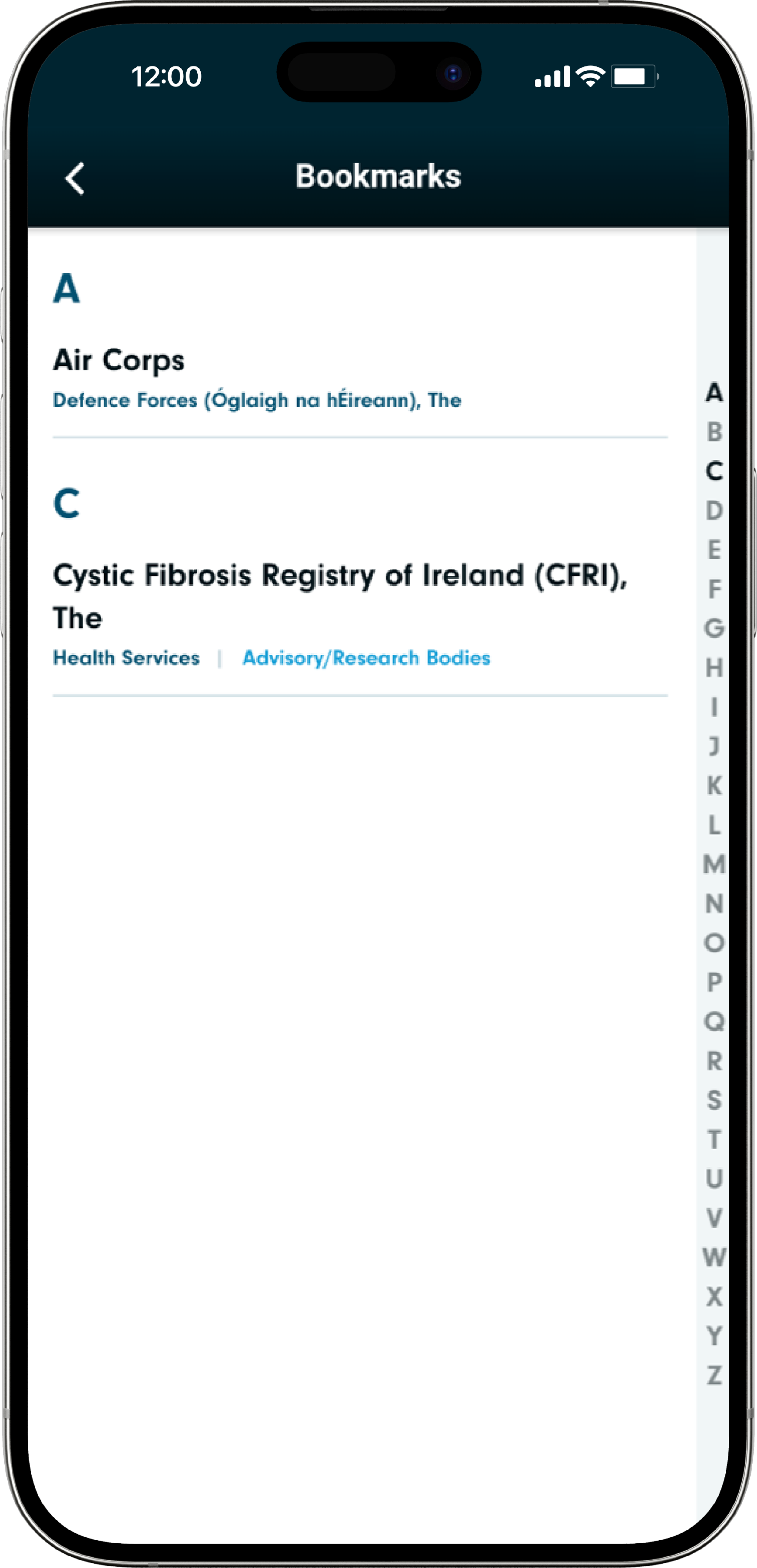
Readers can browse, search, filter by sector, region and organisation type, save favourites, and access content according to their subscription level. The experience is built for how people actually use a directory, quickly, on the move, and often when they only somewhat-remember what they're looking for.
-
02. A desktop application for Windows and macOS
So the same content, search and subscription experience is available on the desk where most public-sector research still happens, not just on a phone.
-
03. A cloud-based CMS for IPA's editorial team.
All 15,500 records were migrated out of QuarkXpress and into a content system designed around the way IPA actually publish: upload, manage, tag, version, and release. Editorial control sits with IPA, not with an external typesetter or print partner.
-
04. Search with "sounds like" and "spelt like" matching
And a relevancy scoring model that surfaces the most appropriate result first. A reader looking for an organisation whose exact name they can't remember now finds it. The IPA team has noted that search "works really well for our users", which is the bar that matters for a reference product.
-
05. A subscription engine.
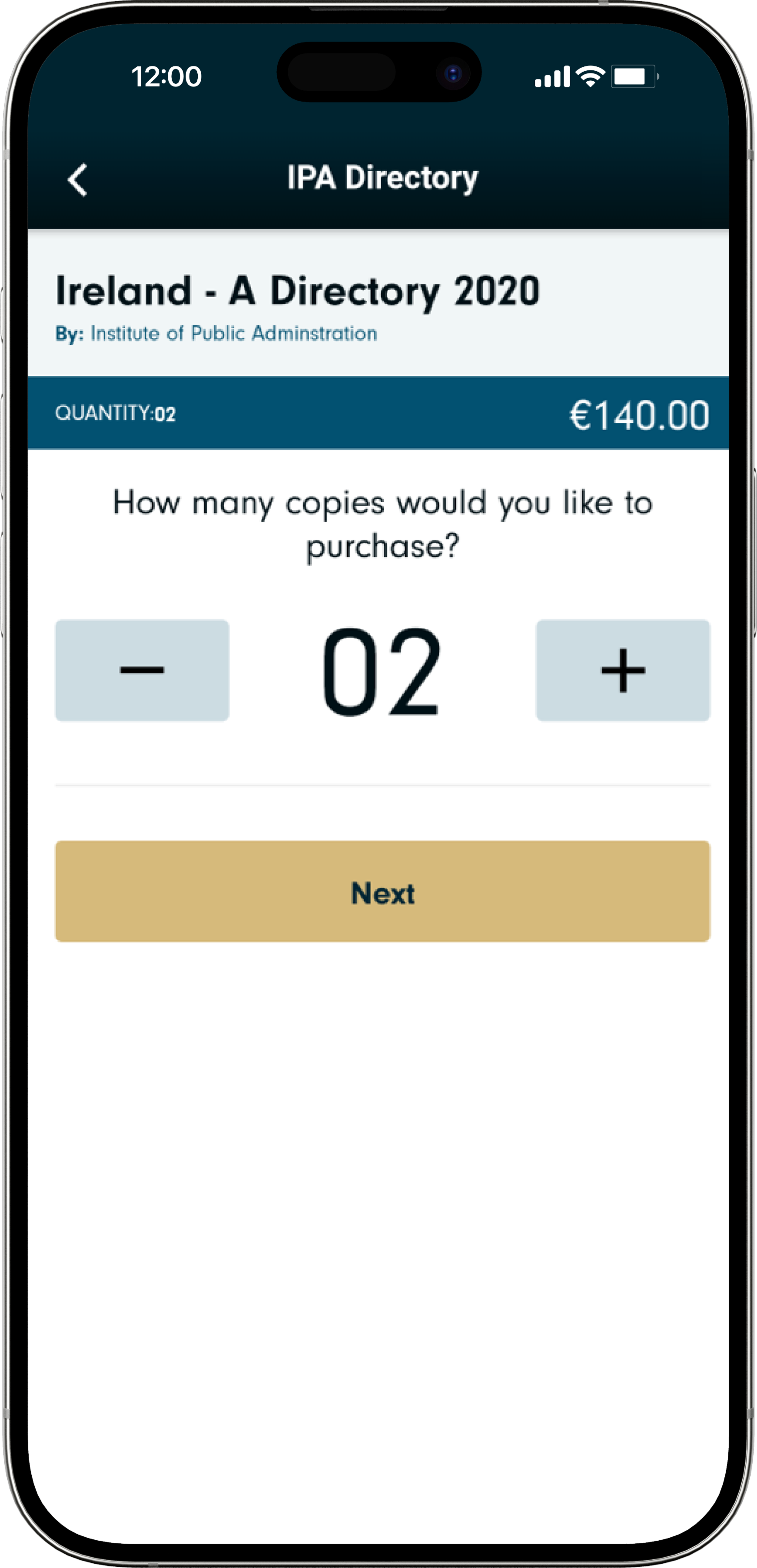
Free sample content at the front of the funnel, full directory access behind a flexible recurring subscription. The directory moves from a one-off sale to an ongoing service, with revenue that compounds rather than resets each year.



WHAT CHANGED
01.
Around 15,500 entries digitised and managed through the CMS.
02.
Time-to-publish reduced from approximately six months to a matter of minutes.
03.
A predicted saving of €75,000 over three years, against the cost of the print production cycle.
04.
A new recurring subscription revenue stream replacing a one-time annual sale.
05.
The directory is now available across iOS, Android, Windows and macOS, with a single content and subscription model behind all four
06.
IPA's editorial team can correct, update, expand and re-publish content in real time, without waiting for the next print run
07.
The directory is no longer a book IPA produces once a year. It's a live service that runs continuously and improves continuously.


“Scaffold Digital produced exactly what we wanted and exceeded our expectations. The search functionality was a huge part of this project and what has been developed is so simplistic and works really well for our users. We enjoyed having a dedicated project manager who answered our queries with no delay. Overall, the team dealt with any unexpected requests quickly, efficiently with no impact to us."
John-Paul Owens / Publishing, Research & Corporate Relations
WHY IT WORKED
A long-established publication is harder to modernise than a new one. The trust attached to it was earned over five decades of editorial discipline, and that trust is easy to lose if the digital version feels like a downgrade dressed up as progress.
We spent the time understanding how the directory was actually being used. Who reached for it, in what situations, and what they needed it to do that the print version couldn't. We mapped the existing publishing workflow end to end, including the manual steps that nobody had questioned because they had always been there. The platform we built doesn't replicate the book on a screen. It encodes what the book was for, and lets IPA deliver it in a way the book never could.
We've stayed with IPA since launch. The directory is now a product that evolves with its readership rather than a publication that ships once a year and waits.
-

Discovery & Strategy
-
Software Development
-

Cloud Infrastructure
-

Support