

A PHONECALL IS FAST,
BUT IT ISN’T A RECORD.
Work > MedicComs
MedicComs started with a number. Research estimates that more than 237 million medication errors occur in England every year. Most cause no harm. A meaningful proportion do, and a great many of them trace back to the same ordinary moment: A question about a prescription, a set of notes or an appointment that took too long to answer, or got answered through a channel that left nothing behind.
The way that question normally gets answered is a phone call. A hospital pharmacist rings a GP practice. The GP is with a patient. A message is left. Someone rings back. Eventually two clinicians speak, the query is resolved, and each of them writes what they took from it into their own separate system and in their own words.
The conversation itself doesn't exist anywhere.
THE PROBLEM
In clinical work, speed and evidence usually pull against each other. Here they had the same problem.
-

Call Inefficiency
The phone call was the bottleneck and the blind spot at the same time. Practitioners lost significant time to hold music and call-backs on queries that were rarely complicated. When the call finally connected, the outcome survived only in two people's memories and whatever each of them recorded separately afterwards.
-

Siloed Systems
Nothing travelled across organisational boundaries. Hospitals, GP practices, community pharmacies and care homes each run their own systems, with their own access rules and their own version of the record. A query that crossed between them had no shared place to live, which is precisely why it fell back to the telephone.
-
Unsecure Messaging
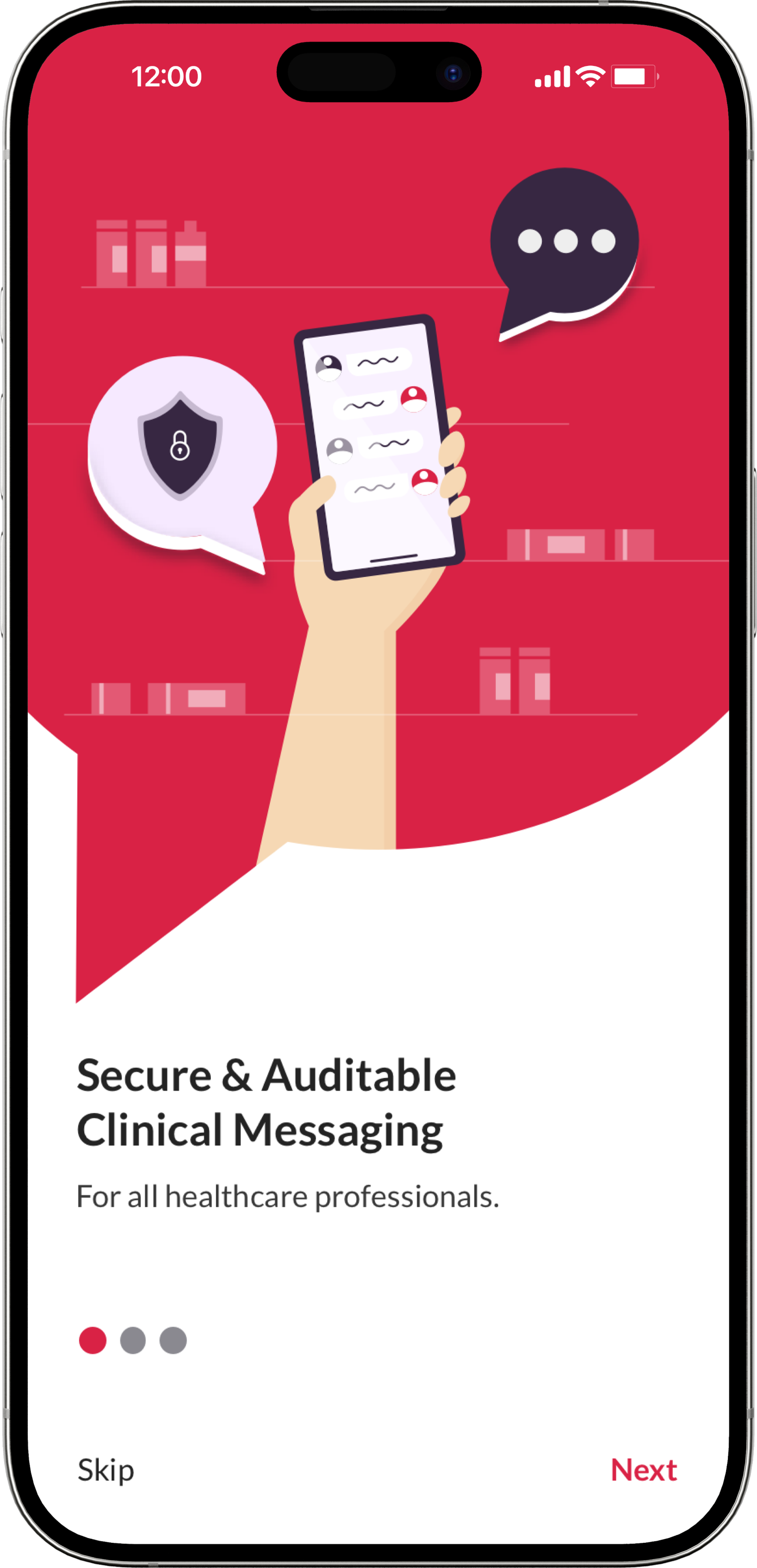
The fast alternatives weren't the safe ones. Consumer messaging apps are quick, which is exactly why they get reached for, and they are not built to carry patient-identifiable information. No role-based access, no organisational control, no audit trail, no way for a governance lead to answer a question about what was shared and with whom.
-

Verified Security
Security had to be demonstrable rather than asserted. A platform carrying patient information between NHS organisations needs independent evidence that it holds up, not a paragraph in a brochure.
-

Clinical Auditability
Auditability isn't a feature in this setting, it's the substance. Who asked, who answered, when they answered, when the matter was closed. In regulated clinical practice that trail is part of how care is evidenced, and a phone call produces none of it.
-
Patient Identity
The patient has to be unambiguous. A thread about "the dosage for Mrs Doherty" is a clinical risk in itself unless the conversation is bound to a specific, validated patient identity.
WHAT WE BUILT
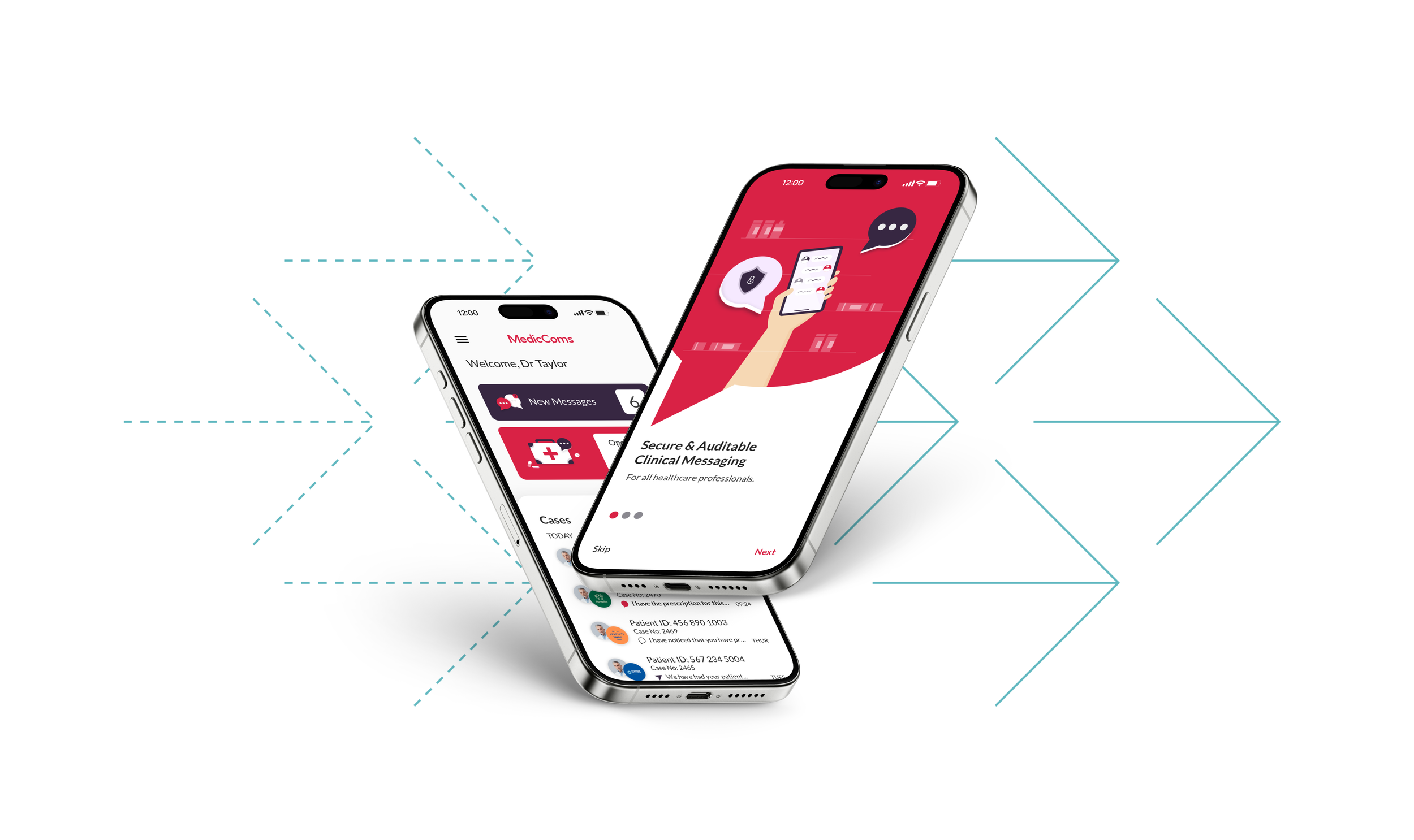
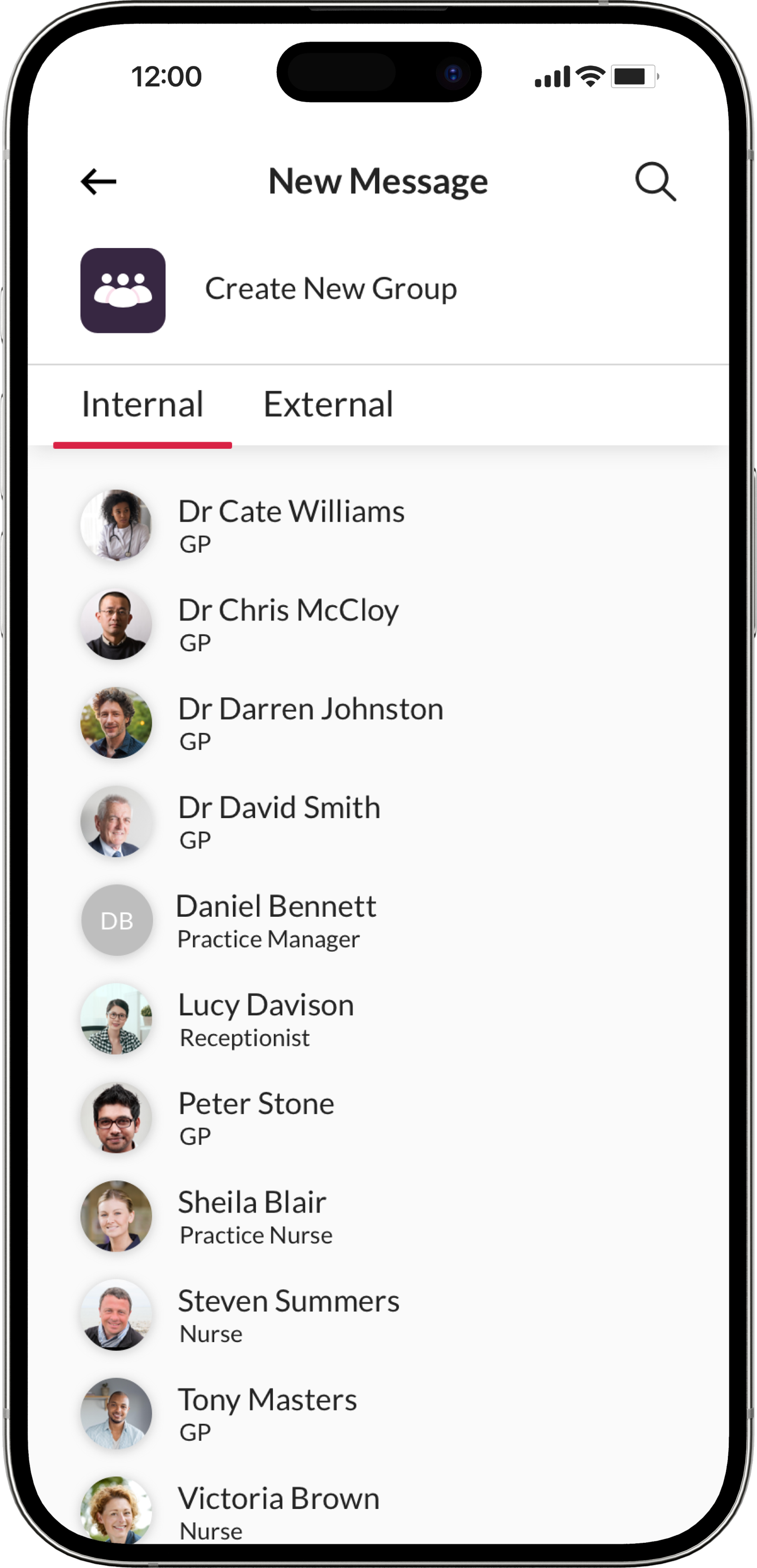
What MedicComs needed wasn't a messaging app for healthcare. They needed clinical conversations to become patient records, fast enough that a practitioner would choose them over picking up the phone, and structured enough that the organisation could stand behind them afterwards.
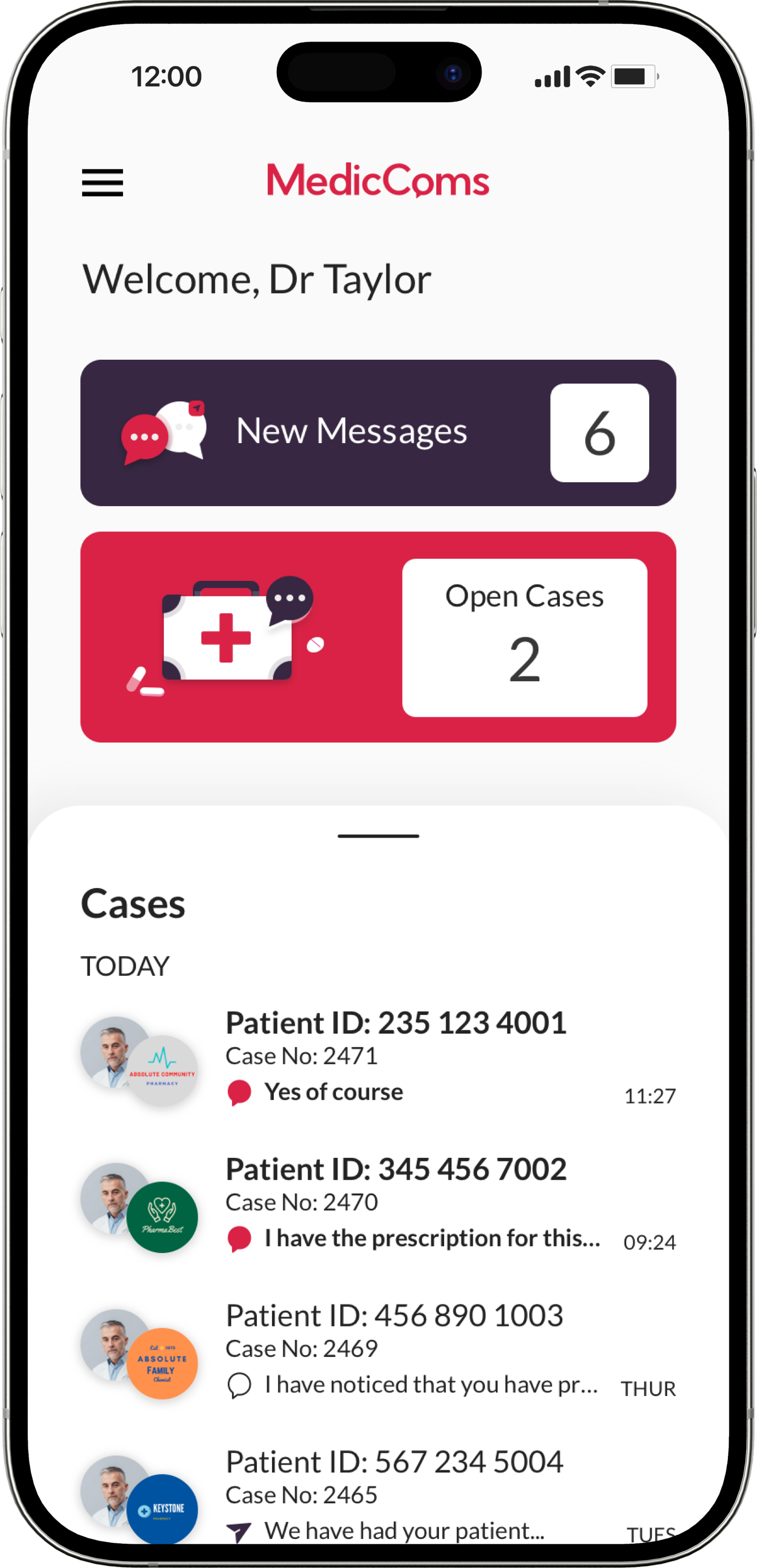
An integrated platform across mobile, desktop and administration: iOS and Android applications for phones and tablets, a desktop web client, and a bespoke Laravel administration portal behind both.
-
01. Real-time direct messaging between practitioners.
Within an organisation and, more importantly, across partner organisations. The hospital pharmacist and the GP are in the same conversation rather than in a queue for each other's switchboard.
-
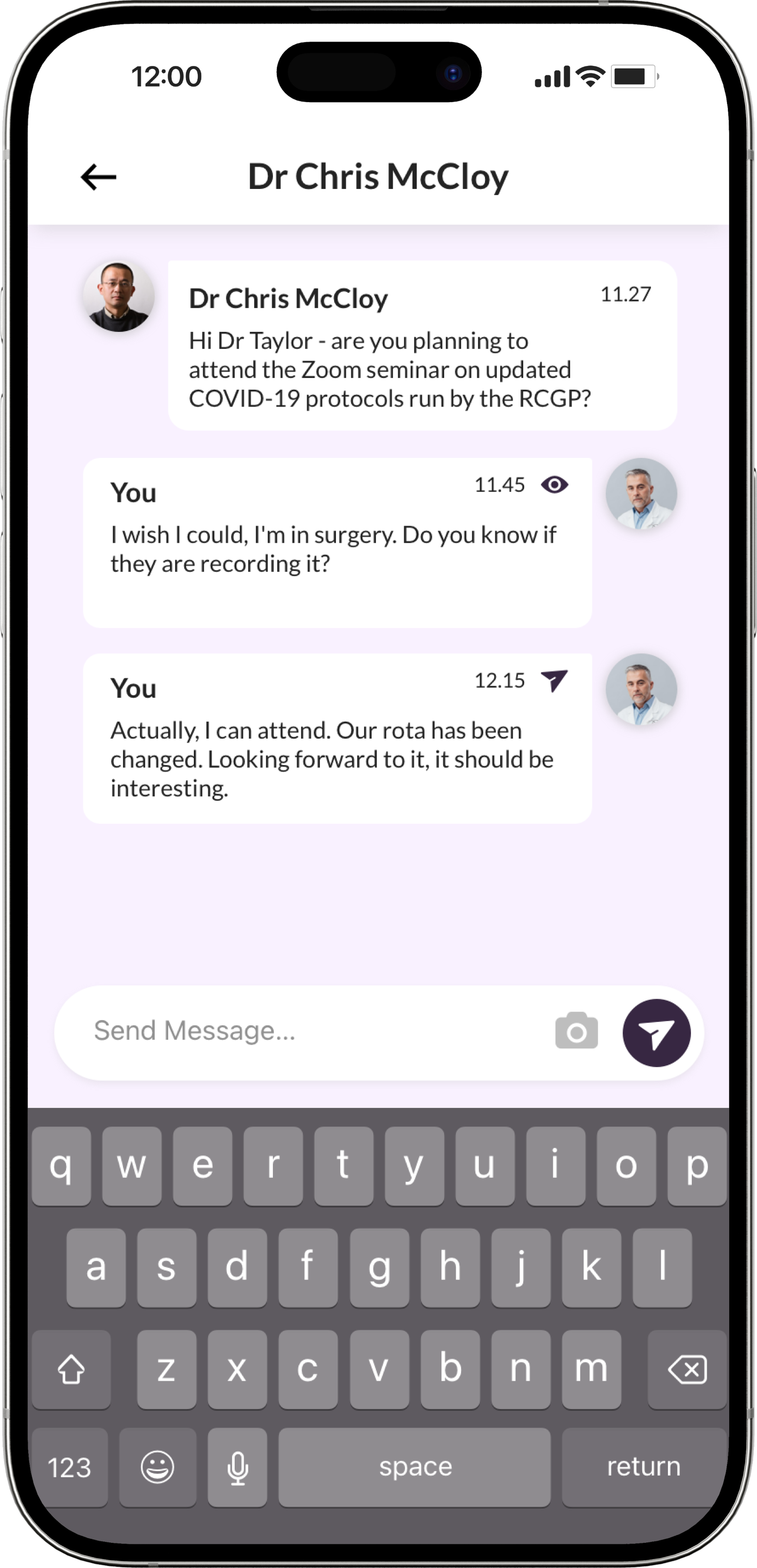
02. Image sharing with sent-at and read-at receipts.
A photograph of a prescription or a chart resolves in seconds what a description takes minutes to fail at. The receipts matter as much as the images: The sender knows whether the message has actually been seen, which is the reassurance a phone call was really providing.
-
03. Case management built on NHS number validation.
Conversations attach to a validated patient identity rather than a name typed from memory. This is the structural difference between a chat thread and a clinical record.
-
04. Full audit trails with timestamps.
Cases carry a recorded opening and closing, and the activity in between is timestamped. The question "what happened with this patient, and when?" has an answer that doesn't depend on anyone's recollection.
-
05. Role-based access controls per organisation.
Each participating organisation controls who can see and do what within its own boundary, which is what makes cross-organisational messaging governable rather than merely possible.
-
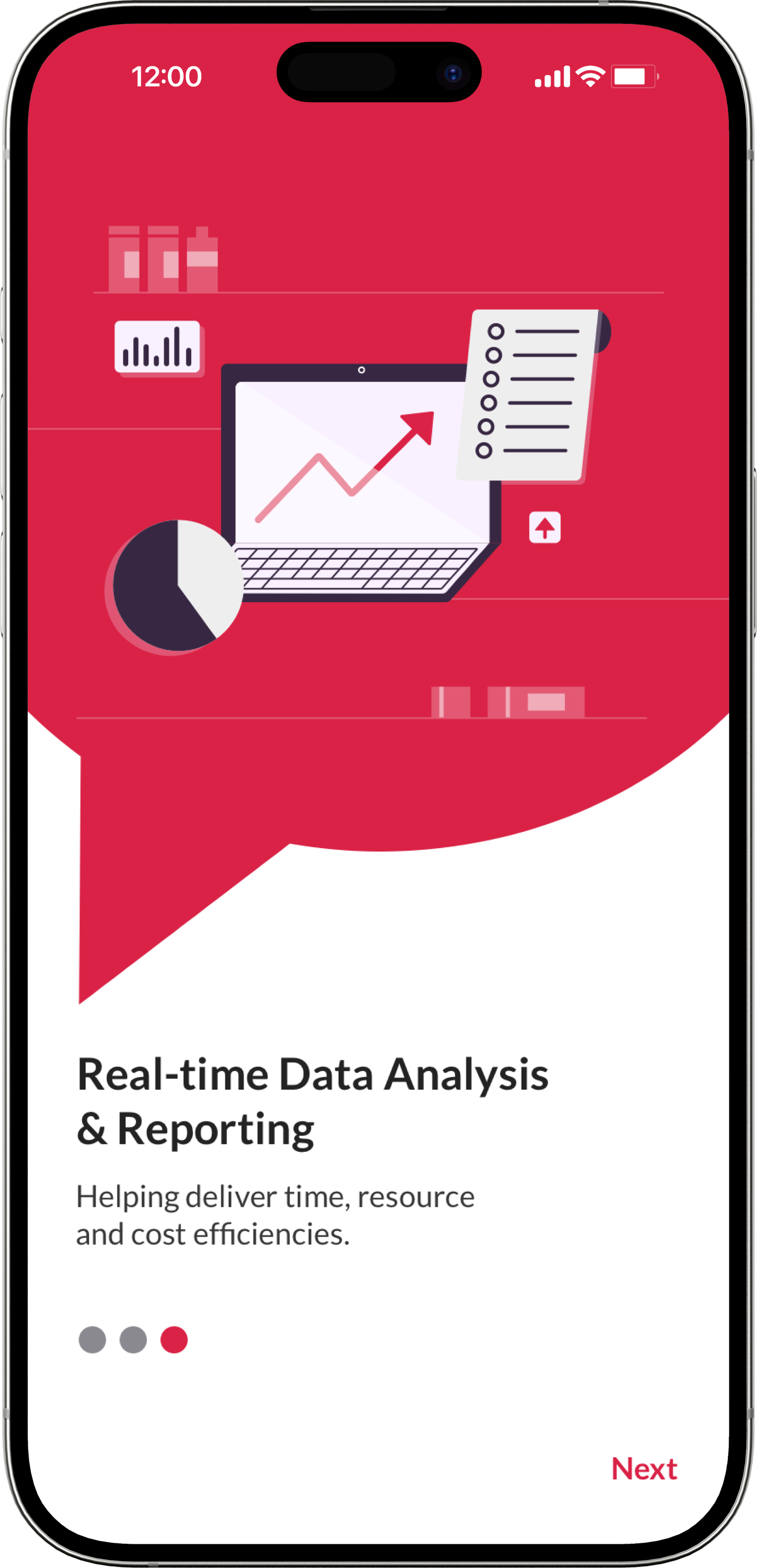
06. Reporting and analytics in the administration portal.
Organisations can see how the platform is being used, where queries concentrate, and how long cases stay open.
-
07. Independent penetration testing.
Third-party security validation, because in this context the claim isn't worth anything without the test behind it.


“To the team at Scaffold — thank you. I cannot wait to start the demos. I think it will be a big hit and it was a real team effort."
Charles & Liz Ensor / Managing Director MedicComs
WHAT CHANGED
01.
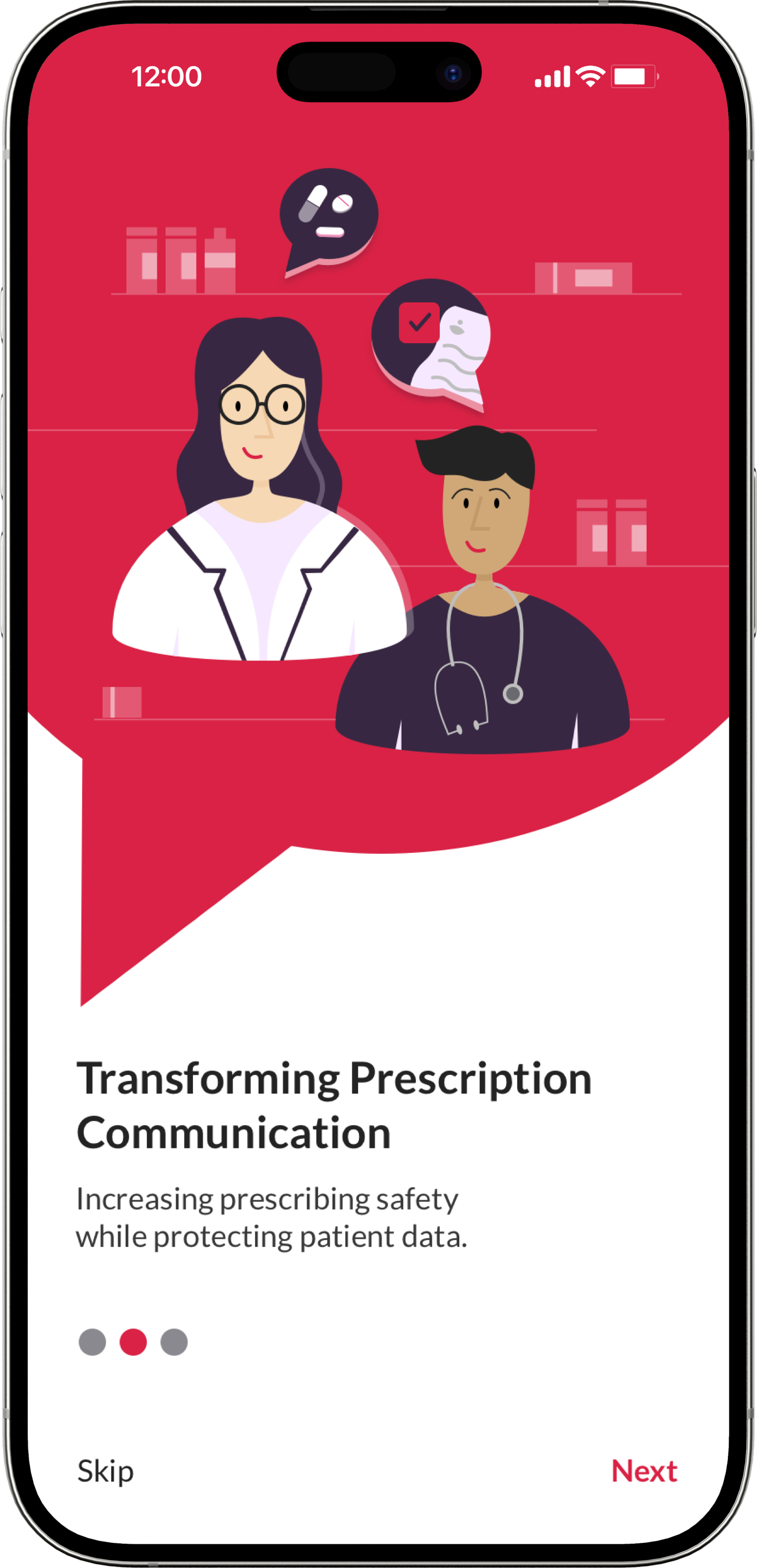
Prescription, notes and appointment queries get resolved through a direct conversation rather than a sequence of missed calls.
02.
Every resolution leaves an auditable record tied to a validated patient identity, instead of existing only in two clinicians' separate notes.
03.
Communication crosses organisational boundaries, hospital, GP, pharmacy, care home and inside a governed channel rather than around one.
04.
Organisations control access by role and can report on activity across their own users.
05.
The platform's security is backed by third-party testing rather than assurance.
WHY IT WORKED
Chat solves the speed problem and leaves the evidence problem exactly where it was, which is why a lot of these types of projects end up sitting alongside the phone rather than replacing it.
The decision that shaped this platform was building around the case rather than the message. Messages are transient by nature and they scroll away, and nobody can say afterwards where one ended. A case has a patient, an owner, an opening, an outcome and a close. Once the conversation lives inside that structure, an audit trail stops being something bolted on and becomes a by-product of people simply doing their work.
The other thing that had to be true was adoption, and adoption in clinical settings is unsentimental. If the platform were slower than lifting the receiver, practitioners would lift the receiver, and every governance benefit would evaporate. So the fast path: Open the app, find the practitioner, send the photograph, get a receipt had to be genuinely faster than the phone call it was replacing. The compliance follows from the speed, not the other way round.


We build custom software to empower business success.
-

Discovery & Strategy
-

Software Development
-

Cloud Infrastructure
-

Support