

A DIGITAL MEMORY BOOK FOR PEOPLE LIVING WITH DEMENTIA, BUILT TO CLINICAL AND RESEARCH STANDARDS
Platforms


Awards

Work > Inspired
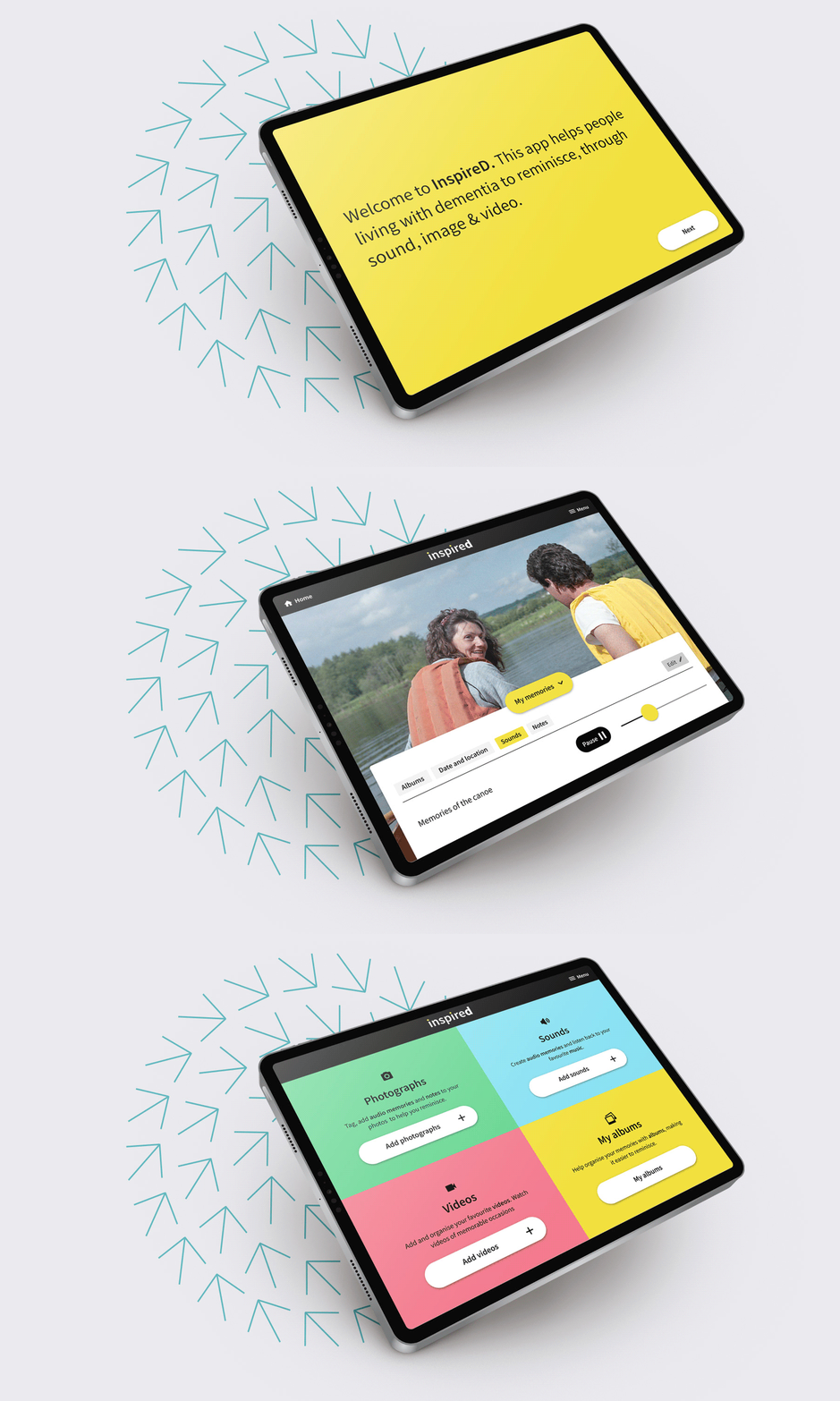
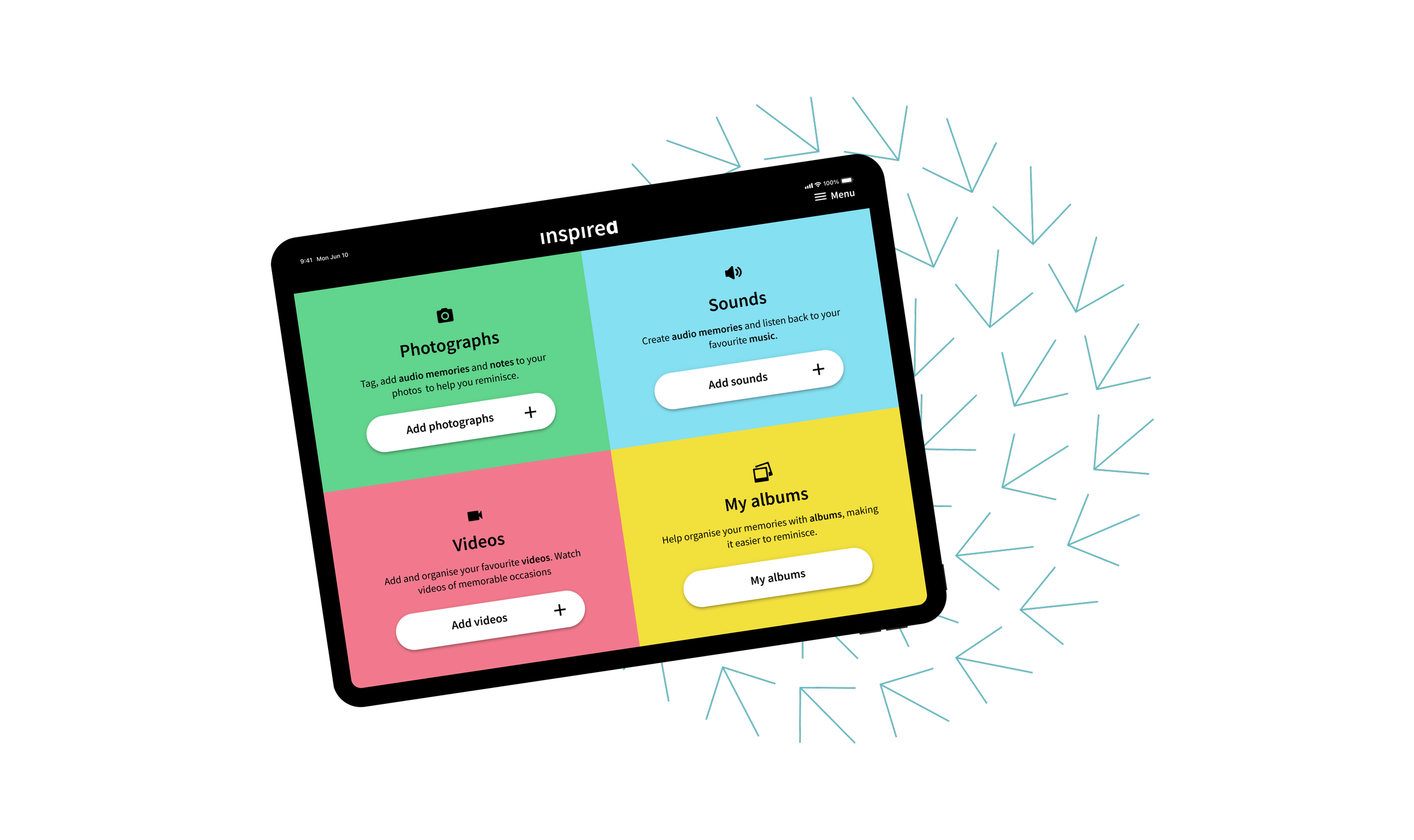
InspireD is a mobile app that helps people living with dementia, their families and their carers reminisce. It captures photos, videos, voice notes and written annotations into a personal memory book that can spark conversation, support emotional connection and reduce anxiety in everyday care settings.
It was commissioned by Ulster University as part of their Dementia Care Research Programme, and built by Scaffold Digital in collaboration with the university's Nursing, Computing and Design faculties, Dementia NI, and people living with dementia themselves.
THE PROBLEM
Reminiscence works. Ulster University's research has already shown that recalling personal memories through conversation, images and sound can meaningfully improve wellbeing for people living with dementia. The question wasn't whether the science was sound. It was whether a piece of consumer-grade software could deliver that science safely, in the home, to the people who needed it most.
That's a harder brief than it sounds:
-
Primary User
The primary user is someone whose cognitive ability and digital confidence will vary, and may decline. The interface has to be usable not just on day one, but as the user's relationship with technology changes.
-

Privacy
The content is deeply personal. Photographs of family, notes written for a parent or partner. Privacy and trust aren't features. They're preconditions.
-
Research Tool
Ulster University needed the app to function as a research instrument as well as a care tool. Every meaningful interaction had to be captured cleanly enough to support academic analysis, without compromising the user's experience or their data.
-

Clinical Assurance
To be trusted by clinicians and adopted in care settings, the app would need to clear ORCHA review and qualify for the HSC Apps 4 Dementia store. That's not a marketing badge. It's a clinical assurance bar.
An MVP existed. It had proven the concept. Turning it into something safe, accessible, research-grade and ready for real users
was a different job.
WHAT WE BUILT
A cross-platform mobile app for iOS and Android, designed around the user first and engineered around the research second.
-
01. A memory book that respects who it's for.
Users can capture photos, videos, audio and notes through interfaces that are deliberately uncluttered, with high contrast, calm pacing and reduced cognitive load. Eye-tracking studies during prototyping let us see how users actually moved through the screens, and we redesigned around what we saw, not what we assumed.
-
02. Offline-first, with optional cloud backup.
All memory content lives locally on the device by default. Optional iCloud or Google Drive backup means a lost or replaced device doesn't mean lost memories, but the user is in control of whether their content ever leaves their phone.
-
03. A research data pipeline that runs in parallel.
Every meaningful action in the app is captured as a structured event and routed into an analysis environment, where Ulster University's research team can study engagement patterns, feature use and long-term interaction trends without ever touching the personal content itself.
-
04. Clinical and accessibility approval built in from the start.
The app was engineered to ORCHA standards from the first sprint, not retrofitted at the end. It achieved a green ORCHA rating and was approved for the HSC Apps 4 Dementia store, one of the first apps to do so.
-
05. Built with the people it's for.
Workshops and user-testing sessions with Dementia NI members, carers and people living with dementia ran throughout the project. Their feedback shaped the design at every iteration, not just the launch version.
WHAT CHANGED
01.
The app is approved and listed in the HSC Apps 4 Dementia store, having achieved an ORCHA Level 2 (green rating)
02.
Available on iOS and Android, on both phone and tablet
03.
Ulster University now has a structured, research-grade dataset of real-world engagement, feeding ongoing academic work into reminiscence and dementia care
04.
People living with dementia and their carers have a memory book they can use safely at home, in care settings, and in conversation with the people who matter to them
05.
The platform is built to scale with the research programme as it grows
WHY IT WORKED
This wasn't a project where we could turn up with a feature list and a deadline. It was a project where the people we were designing for had to be at the table, and where the people commissioning it needed something that would stand up to clinical scrutiny and academic peer review at the same time.
We spent the time understanding both sides of that brief. What it actually feels like to use a phone when your cognitive abilities are changing. What Ulster University's research team needed the data to be able to tell them. Where the lines were between a care tool, a research instrument and a piece of consumer software, and how to build something that was all three without compromising any of them.
The result is an app that holds up under clinical assessment, supports a live research programme, and quietly does the thing it was built to do:
help someone remember.
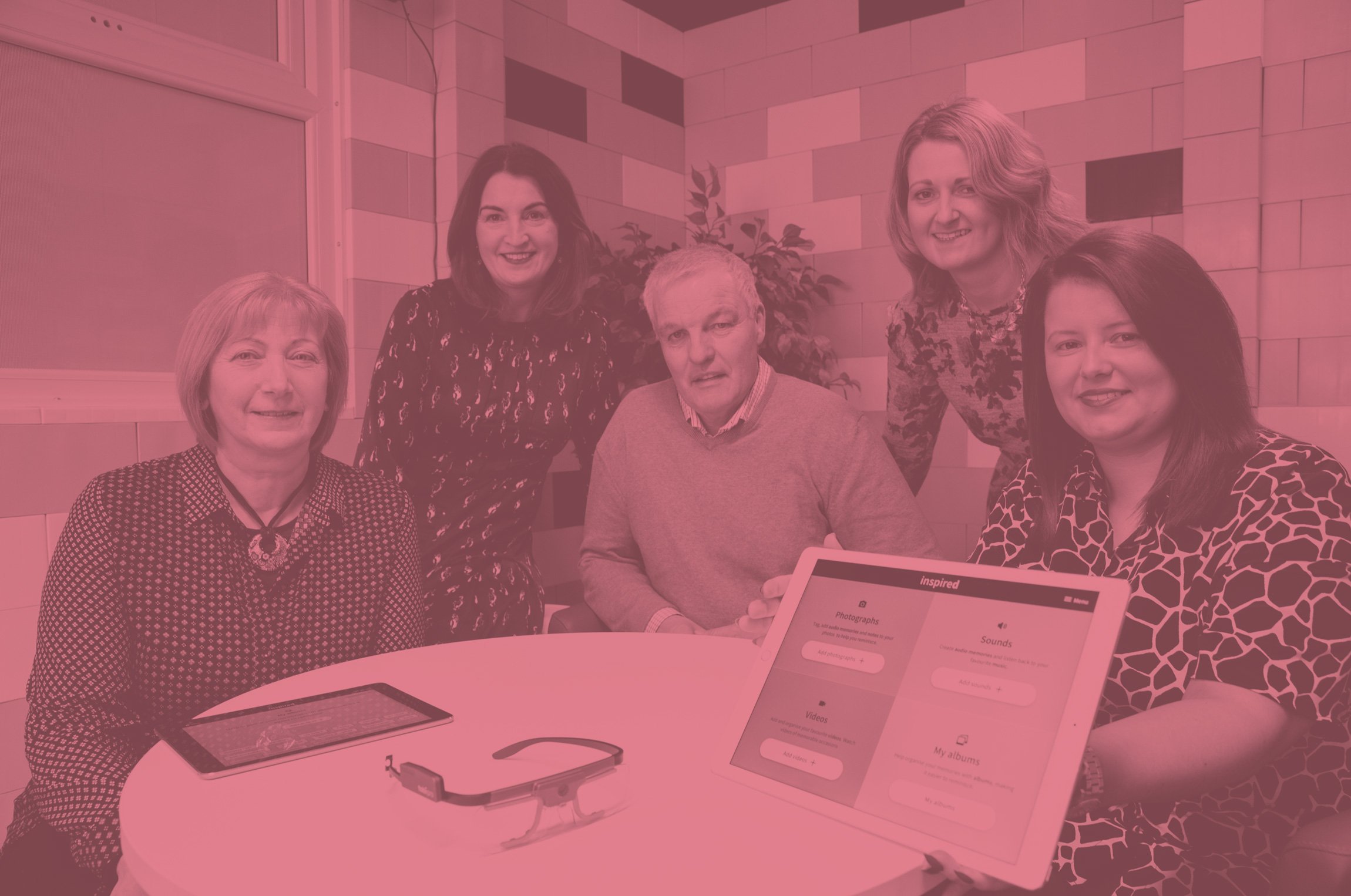

“This truly collaborative project brought together Ulster’s research expertise in Nursing, Computing and Design with the lived experience of Dementia NI members and local app developer Scaffold Digital to create an app which has the power to enhance the lives of those living with dementia.”
Professor Assumpta Ryan / Professor of Ageing and Health at Ulster University

We build custom software to empower business success.
-

Discovery & Strategy
-
Software Development
-

Cloud Infrastructure
-

Support