
BUILDING BIOFEEDBACK INTO A PHONE, WITH MEASURABLE OUTCOMES TO PROVE IT.
Platforms


Awards

Work > TakeTen
TakeTen helps people recognise stress in the moment and regulate themselves through breathing and physiological feedback. It's used in workplaces, in personal life, and increasingly in clinical and education settings where stress management is a measurable outcome rather than a wellness brochure.
We've worked with TakeTen across multiple iterations of the platform, evolving it from an early stress management app into a full biofeedback platform with a workplace trial at Danske Bank that produced retention numbers most health apps don't come close to.


THE PROBLEM
Digital wellbeing is a crowded space, and most of it isn’t useful. The pattern is familiar. An app launches with strong design and good intentions, sits on someone's home screen for two weeks, and is then quietly deleted. Industry retention benchmarks for health apps sit around 19% after eight weeks. Whatever's being sold, it isn't sustained behaviour change.
TakeTen needed to be different, and the constraints were real:
-
Goals
Stress happens in short, intense moments. A platform that only works as a daily ten-minute habit misses the moments it's actually meant to help with.
-
Disconnected Content
Most consumer wellbeing apps offer passive content. Meditations, articles, audio. There's no closed feedback loop between what the user is doing and what their body is doing, which makes it hard to demonstrate cause and effect, and easier to disengage.
-

Technical Limitations
Off-the-shelf biometric SDKs were available, but they came with constraints. Limited control over signal processing, scoring logic and how physiological data drove the interaction. Building on someone else's stack would have capped what TakeTen could ever do with the platform.
-
Hardware Access
Specialist hardware was a non-starter. To be deployable in a workplace wellbeing programme, the app had to work on the phone the user already owned, with no peripherals and no clinical-grade wearable.
-

Data
Whatever was built had to generate credible engagement and outcome data. A workplace wellbeing programme that can't show evidence of impact is a line item under review.
WHAT WE BUILT
What TakeTen needed wasn't another wellness app.
They needed a piece of biofeedback engineering that could detect physiological state from a standard smartphone, drive a real-time feedback loop the user could feel, and produce data that would stand up under organisational evaluation.
A bespoke biofeedback platform with a custom mobile SDK at its core, designed alongside the user experience rather than wrapped around someone else's stack.
-
01.A bespoke biofeedback SDK
It captures live camera data from the user's smartphone, processes photoplethysmography signals, detecting heart rate through changes in light reflected by the skin in real time, and calculates heart-rate variability (HRV) directly on the device. No specialist hardware. No third-party dependency. The signal processing, scoring logic and stress zone detection are all under TakeTen's direct control, and the data never has to leave the device for the feedback loop to work.
-
02. A closed feedback loop between body and screen
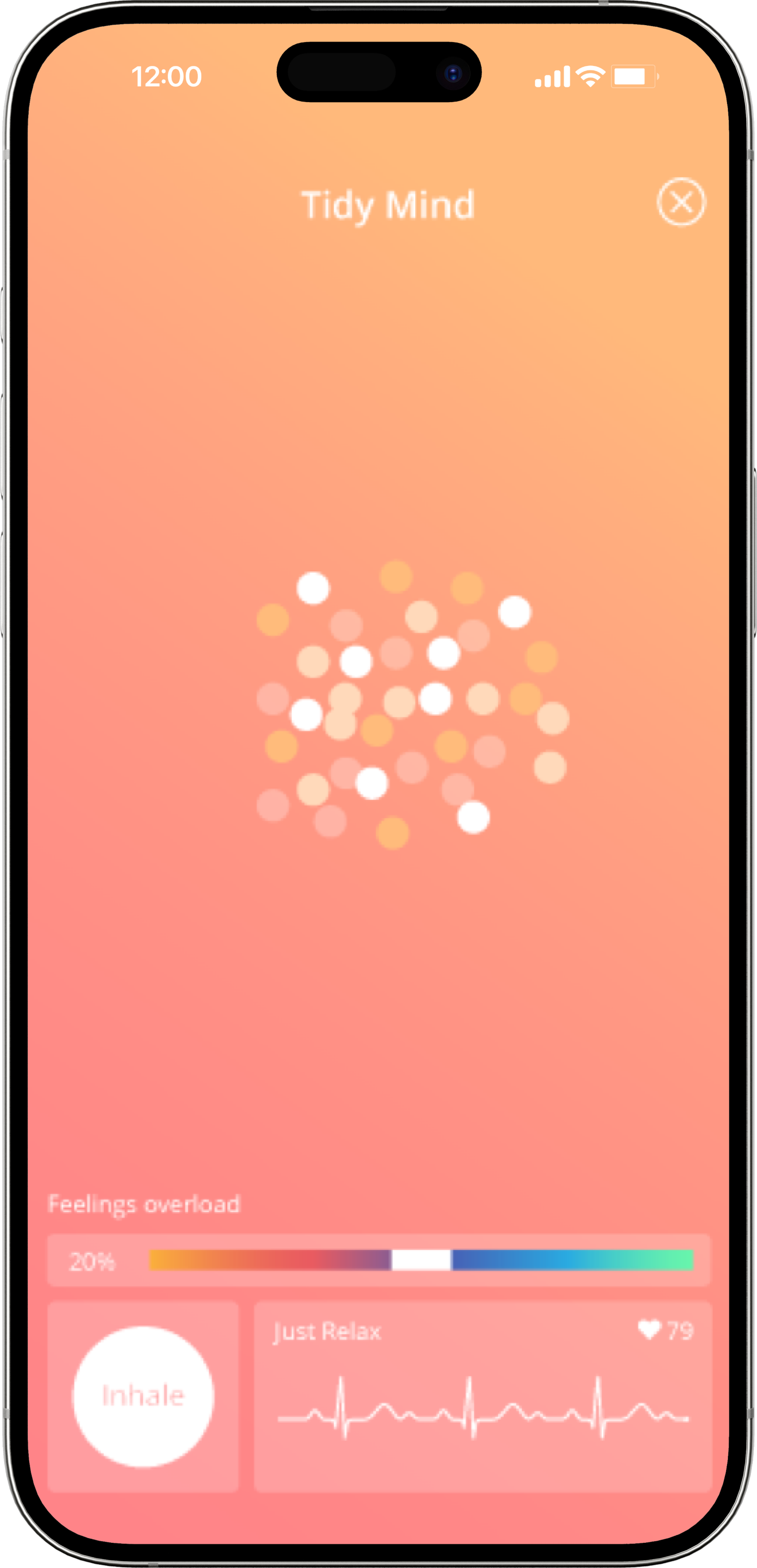
Because the SDK was designed alongside the user experience, physiological changes immediately influence what's happening on screen. Visuals, gameplay and progression all respond to HRV in real time, so the user can see their own regulation working as it happens.
-
03. A traffic light system that makes physiological state legible.
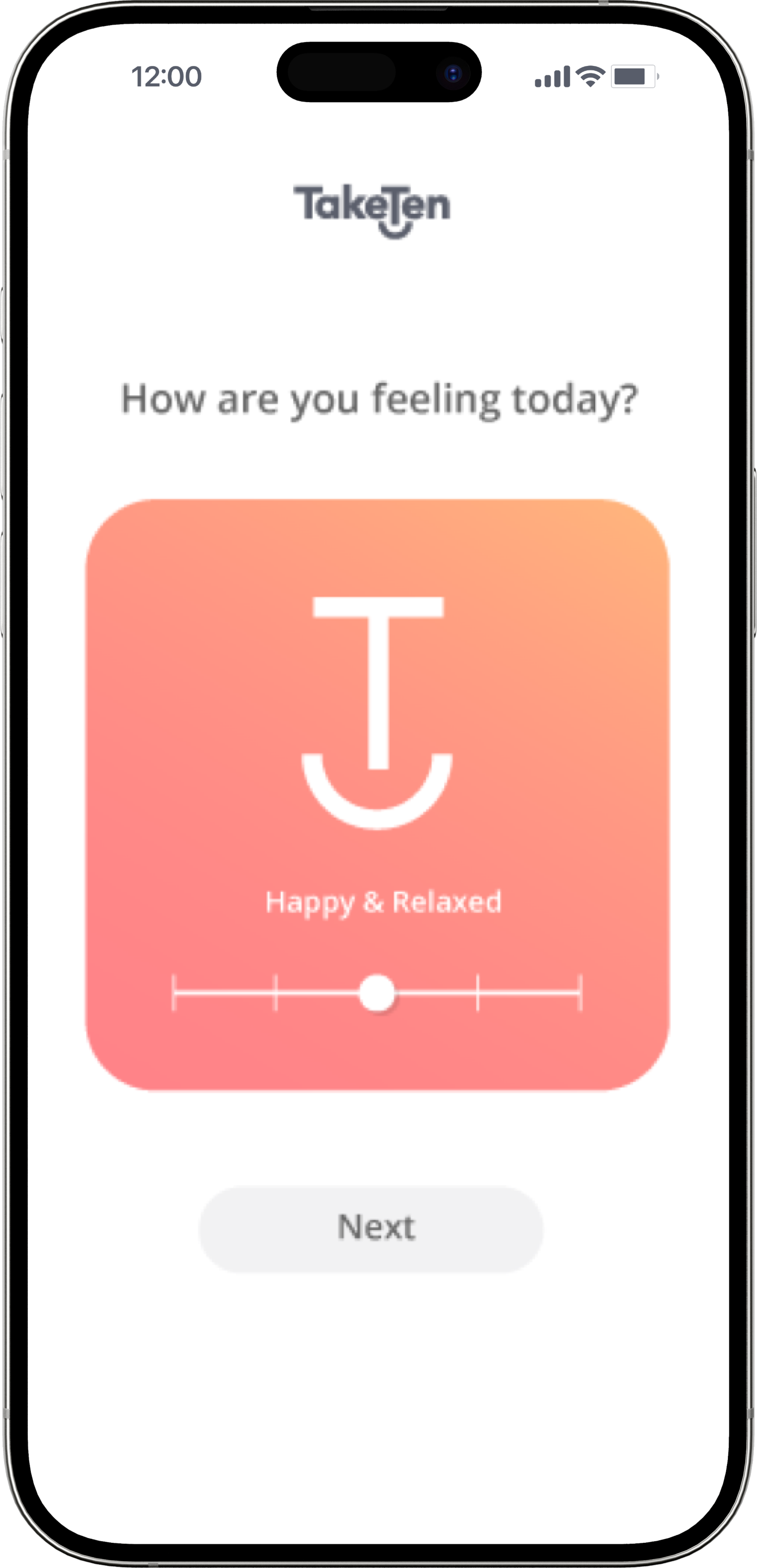
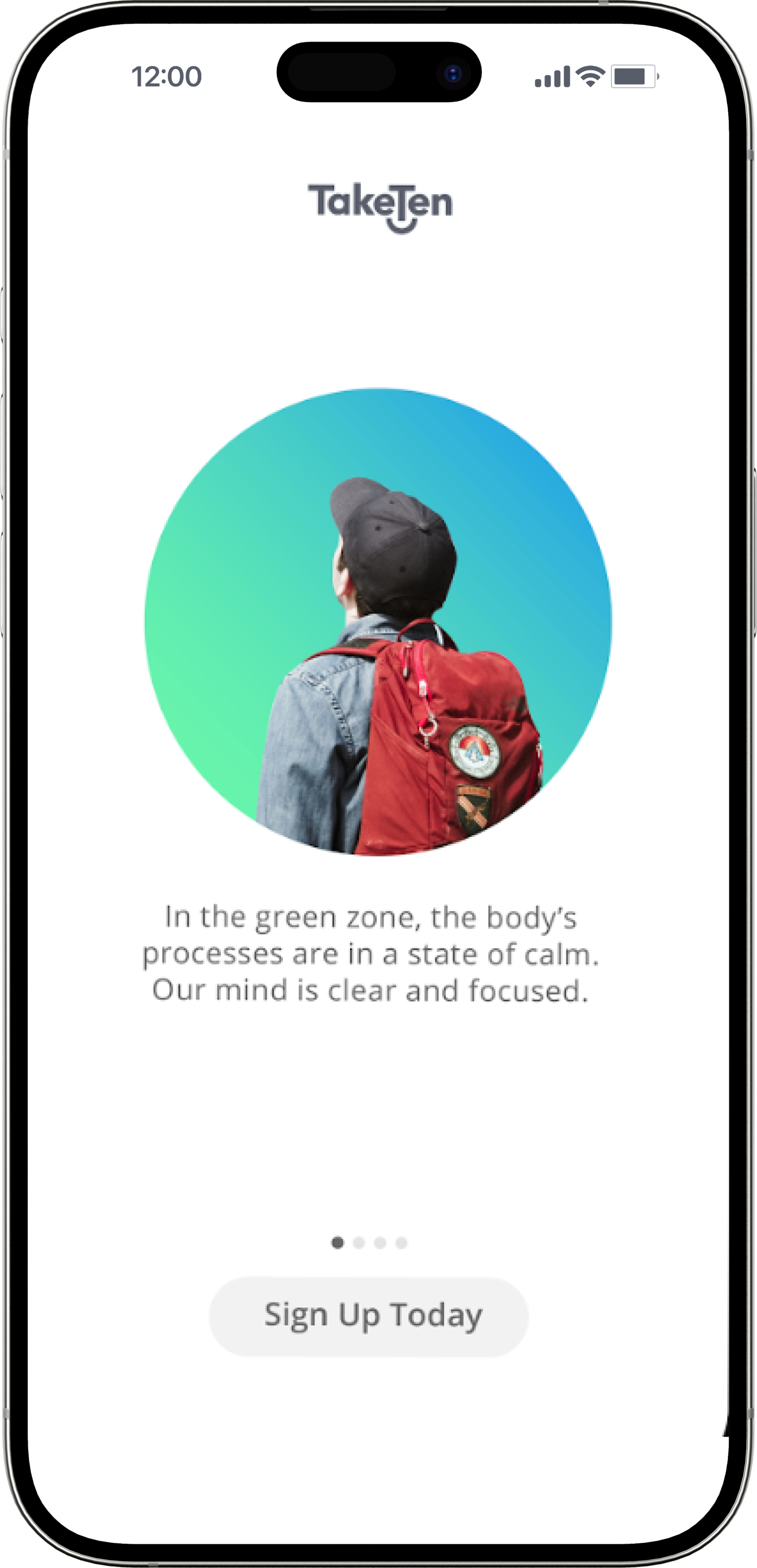
Green for regulated calm. Yellow for elevated but manageable stress. Red for high stress requiring intervention. The colour-coded model translates an abstract biometric signal into something a non-technical user can read instantly and act on.
-
04. Three core regulation experiences
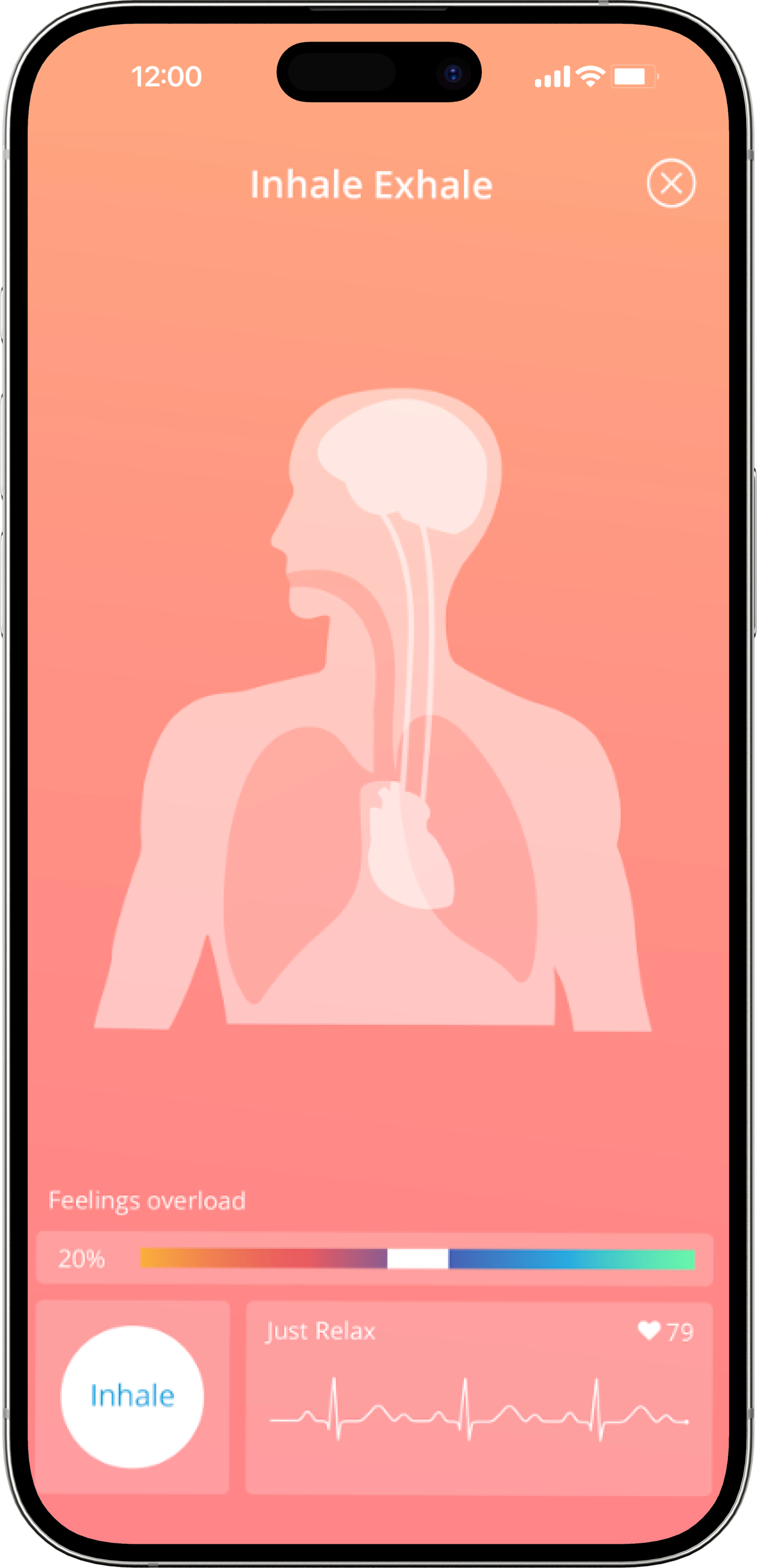
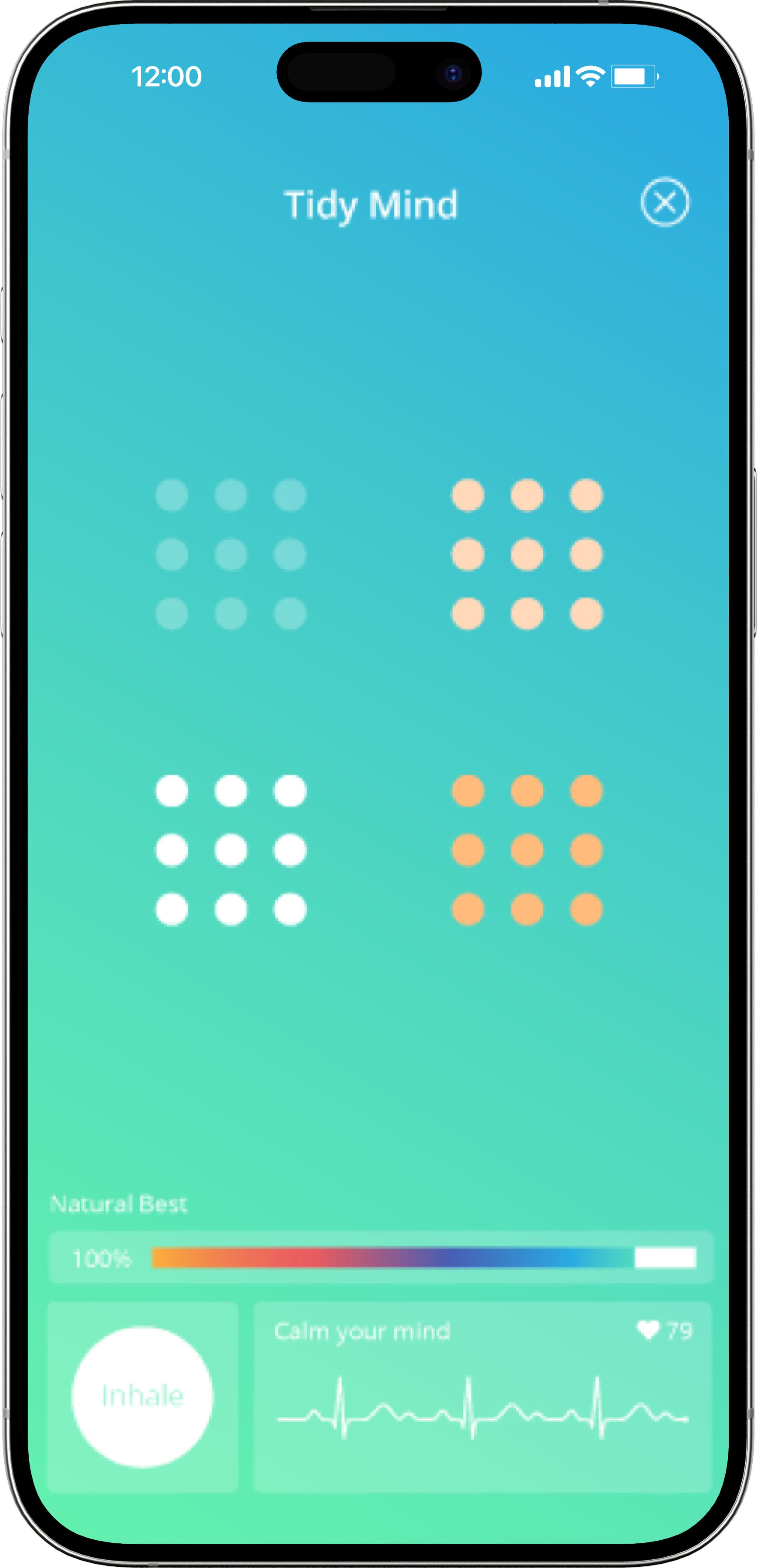
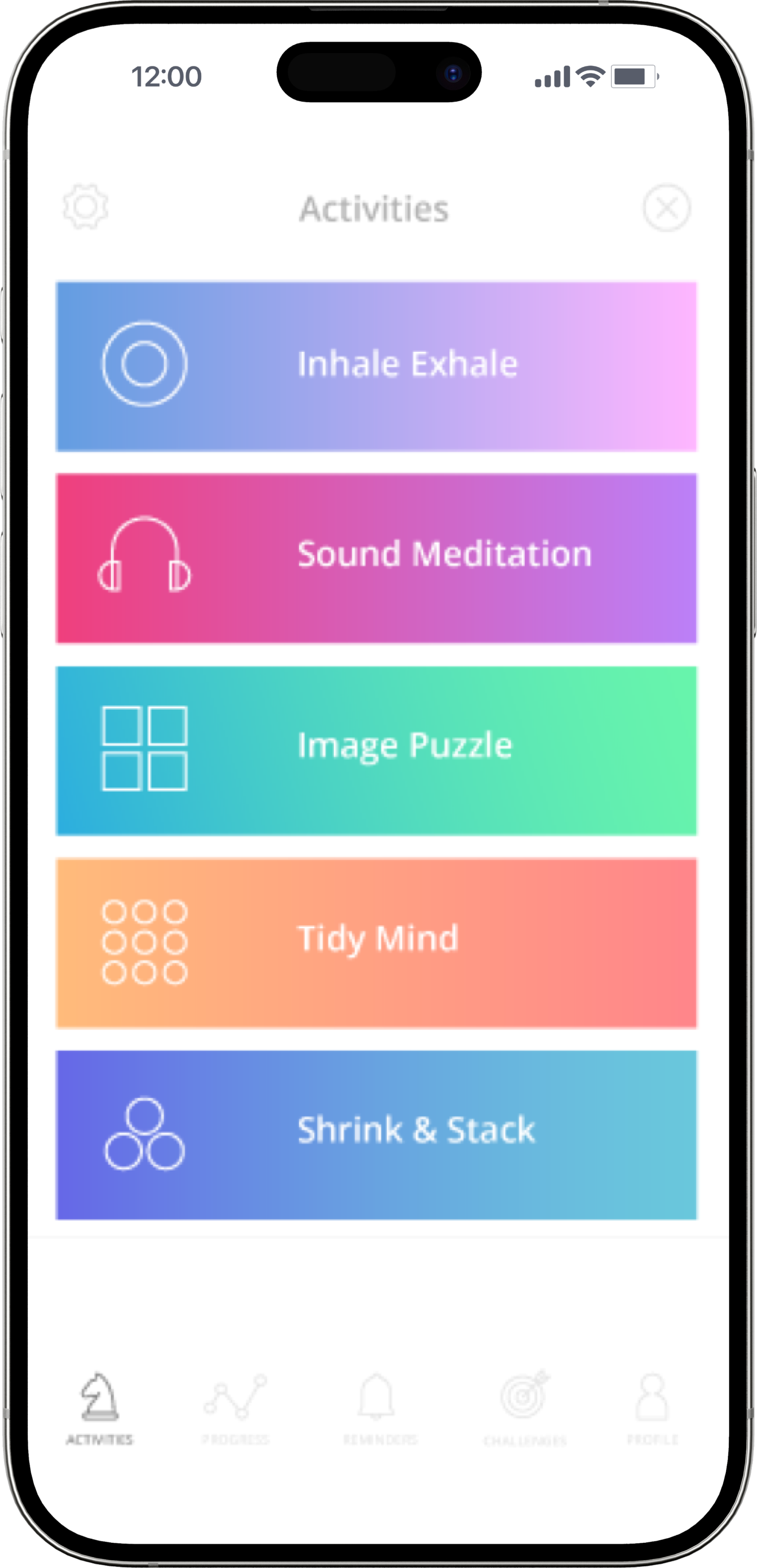
A breathing exercise with visual cues that the user can pace against. A meditation module with structured sessions. A game that uses HRV directly as the control input, sorting dots based on the user's heart rate. Each is short, accessible from cold, and usable in the moments stress actually shows up.
-
05. Cross-platform mobile delivery for iOS and Android.
Designed for rapid access and minimal cognitive load. A user can start a session within seconds, which is the bar that matters when you're using it in the moment you actually need it.
-
06. Embedded analytics from day one
Session frequency, duration, retention, time-of-day usage and transitions between stress zones, captured for both individual self-tracking and aggregate organisational reporting. Privacy-preserving at the individual level, useful at the programme level.


WHAT CHANGED
01.
In an eight-week workplace trial at Danske Bank, approximately 60% of users were still using the app, against an industry average of around 19%.
02.
Usage patterns aligned with reported high-stress periods across the day, including early mornings, late afternoons and late evenings
03.
Users demonstrated improved awareness of their own stress states through real-time feedback
04.
The platform shifted users from reactive stress management to proactive self-regulation, with measurable evidence to support it
TakeTen now have a reusable, extensible technical foundation for further health-tech innovation, with the SDK and platform architecture supporting expansion into corporate wellness, education, neurodiversity support and care settings without rebuilding the core system
WHY IT WORKED
The shortcut on a project like this is to reach for a third-party biometric SDK, wrap it in a nice UI, and ship a wellbeing app that looks like all the others. It's faster, it's cheaper, and it doesn't work.
We made the call early that TakeTen needed its own SDK, not because bespoke is always better, but because the closed feedback loop between physiology and interaction is the thing that makes the platform effective. If the SDK is generic, the feedback loop is generic. If the feedback loop is generic, the user disengages, and the retention curve looks like everyone else's.
Spending the time to build it properly is what produced the Danske Bank result. It's also what gives TakeTen a platform they can extend into new settings without starting over each time. The work we did at the engineering layer is what makes the user experience feel like something different, and what gives the analytics enough integrity to stand up in an organisational evaluation.
The retention number is the headline. The reason it's there is the engineering underneath it.




-

Discovery & Strategy
-
Software Development
-

Cloud Infrastructure
-

Support