
CLOSING THE DATA GAP BETWEEN THE MILL AND THE FIELDS IT DEPENDS ON.
Platforms

Work > White’s Oats
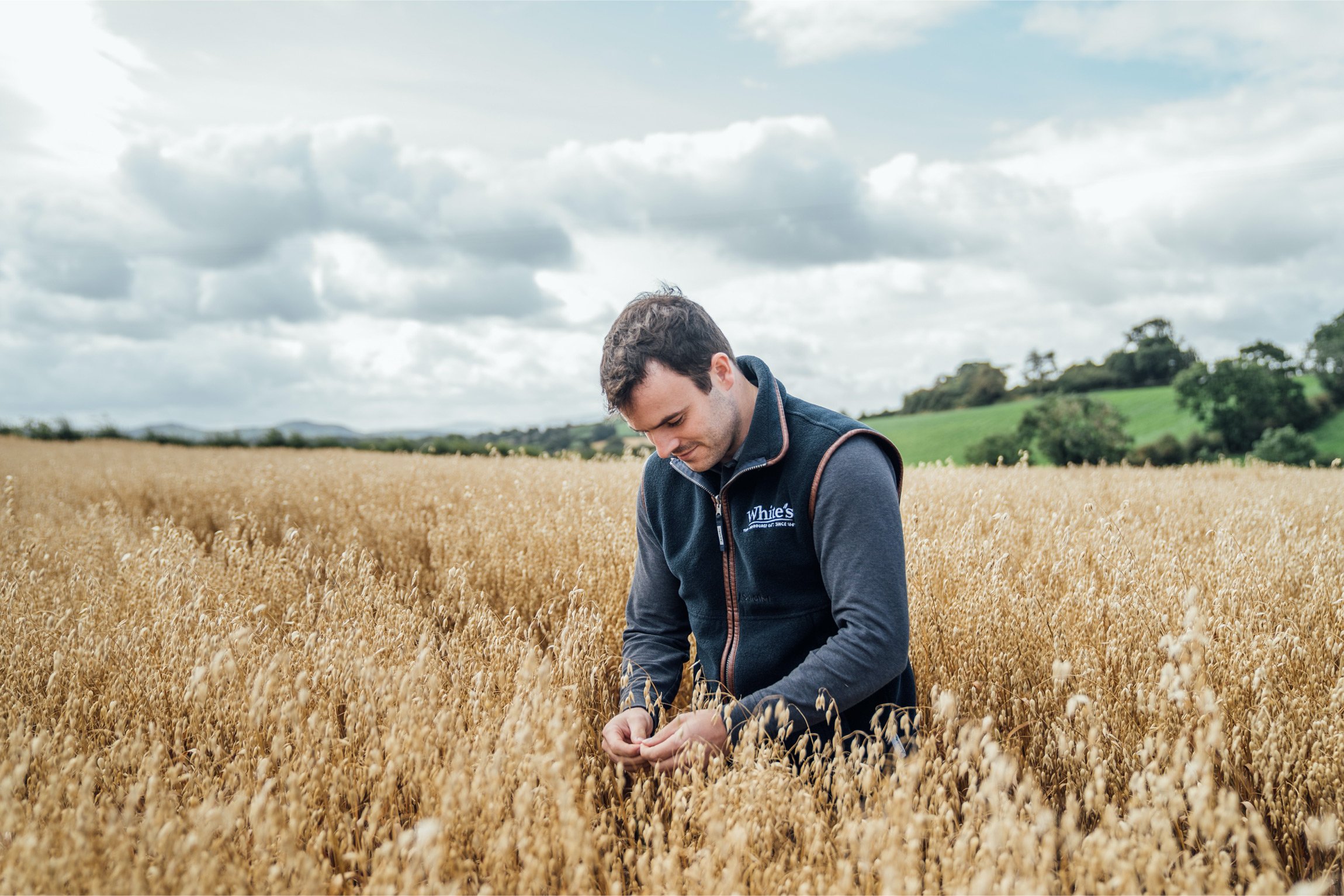
White's Oats have been milling oats in Ireland since 1841. In 2012 they established the Quality Oat Group, a collaboration with their grower network designed to identify the agronomic factors that drive crop quality, yield and mill performance. The group works because the relationship between mill and grower is close. Better data, shared in both directions, leads to better crops.
The data was the bit that wasn't quite working.
THE PROBLEM
The Quality Oat Group was producing real value, but the way information moved between growers and the mill couldn't keep up with what the group was trying to do.
-
Mobile Signal
A lot of the relevant data is recorded in the field. Many fields don't have mobile signal. Anything built for growers had to keep working when the connection didn't.
-
Crop Data
Crop data was being captured on paper or in spreadsheets, then submitted in batches and analysed weeks after the fact. By the time White's agronomy team could act on what the data showed, the moment to act had often passed.
-
Variety of Users
Many growers don't spend their working day in front of a computer. Whatever was built had to be usable by people whose digital comfort levels varied widely, in working environments that don't accommodate fiddly interfaces.
-
Information Sharing
Growers wanted to share information with each other, not just submit it upwards. Knowledge about what was working in a particular season, in a particular soil type, in a particular variety, was sitting in individual heads with no easy way to surface it across the network.
-

Operational Visibility
Operational visibility across the business was patchy. Leadership relied on fragmented reports and delayed updates rather than seeing what was actually happening in real time. By the time an issue surfaced, it had often already cost time and money.
-
Information Overview
White's needed visibility across the whole grower base, not just individual submissions. They needed to see patterns, segment by region or variety, and communicate back to specific growers or cohorts when something changed.
WHAT WE BUILT
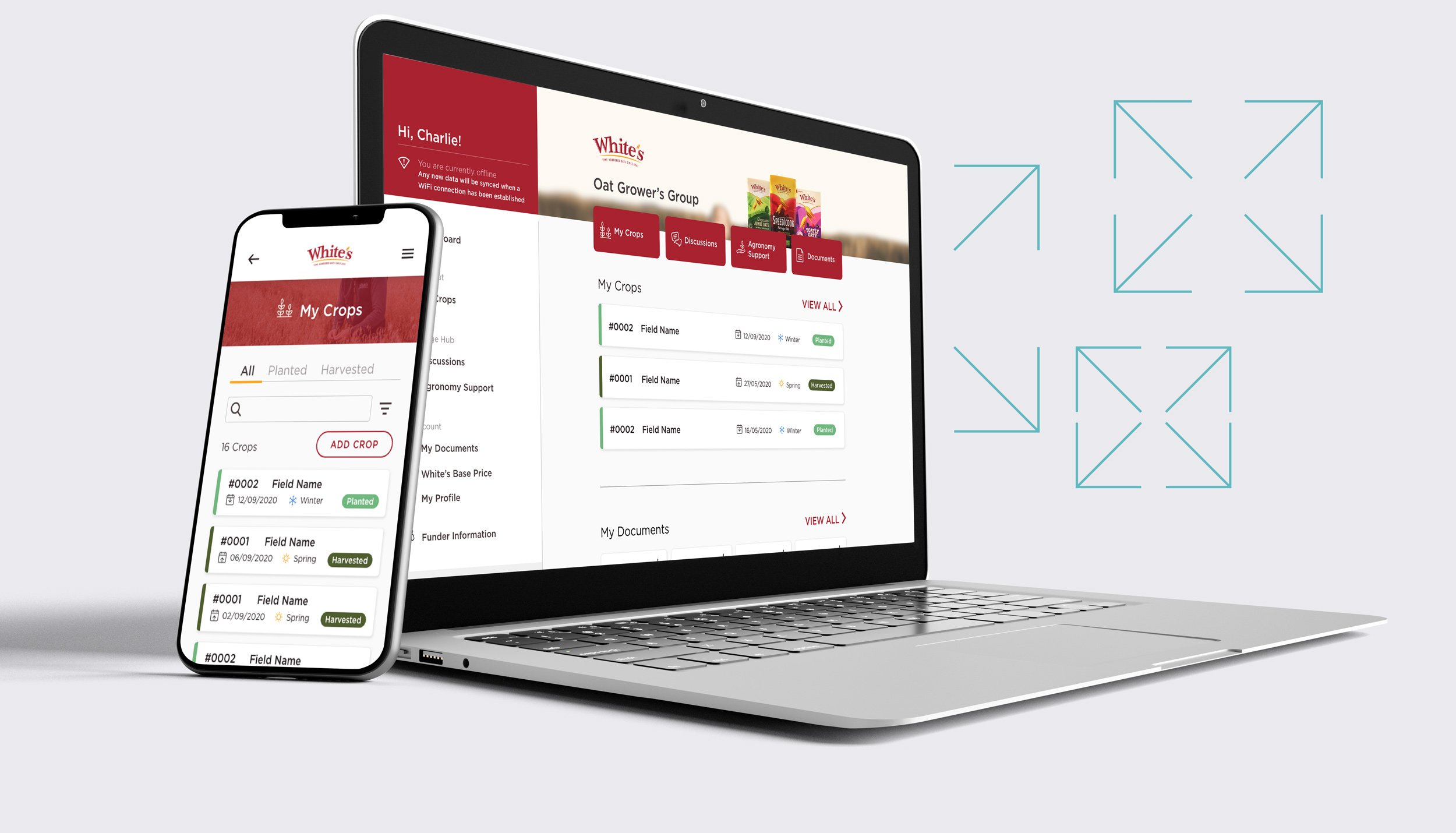
A cross-platform app for growers, with an admin platform behind it for White's Oats and the Quality Oat Group.
What White's needed wasn't a data capture form. They needed a platform that could collect crop data reliably from the field, give the agronomy team near-real-time visibility, and create a place for growers to share knowledge with each other and with the mill.
-
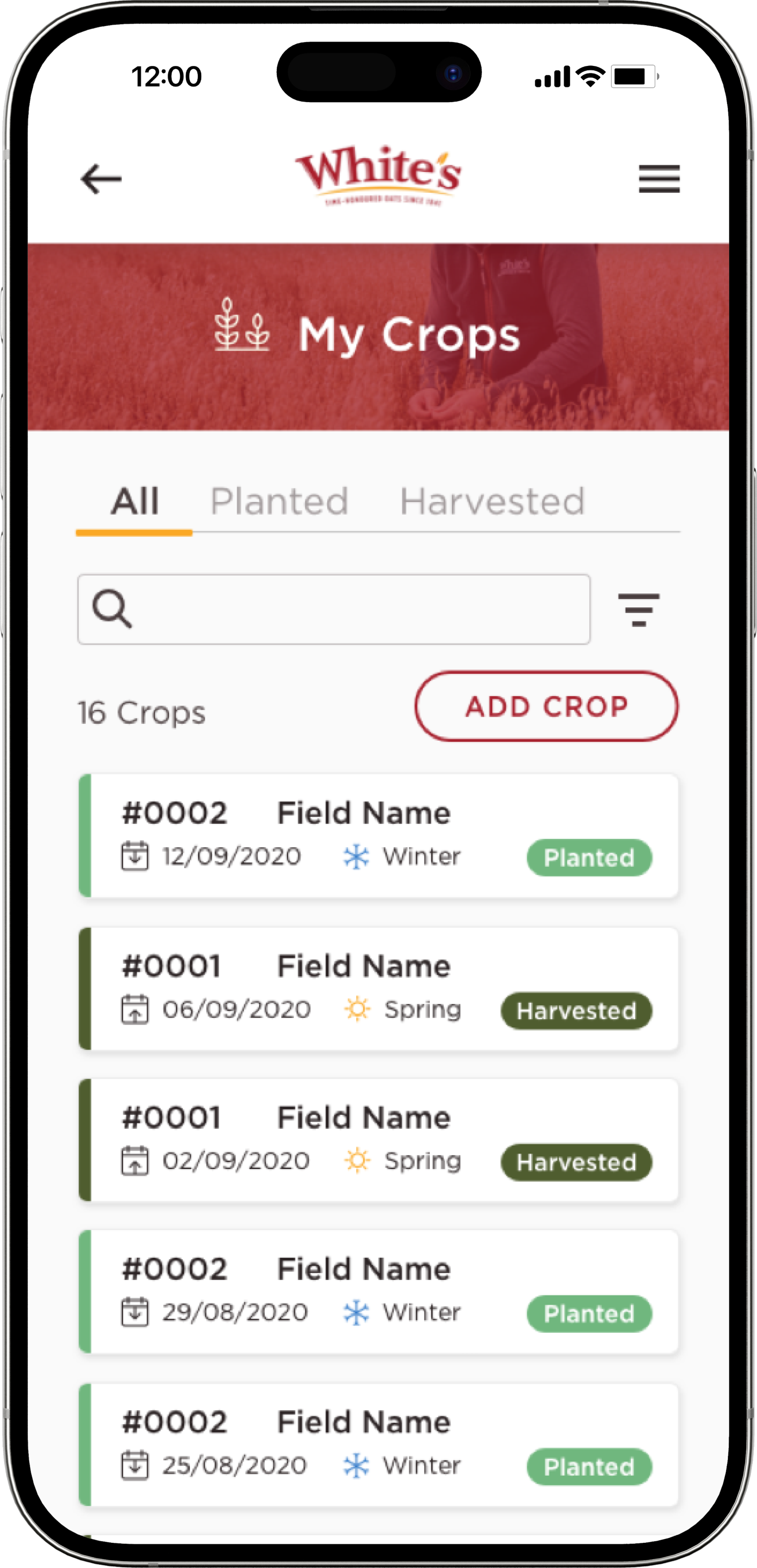
01. Offline-first crop data capture.
Growers can record crop information, tag fields and plots, and upload images from anywhere, including fields with no signal. Data is stored on the device and syncs automatically the moment a connection comes back, with clear feedback so the grower knows what's saved and what's pending.
-
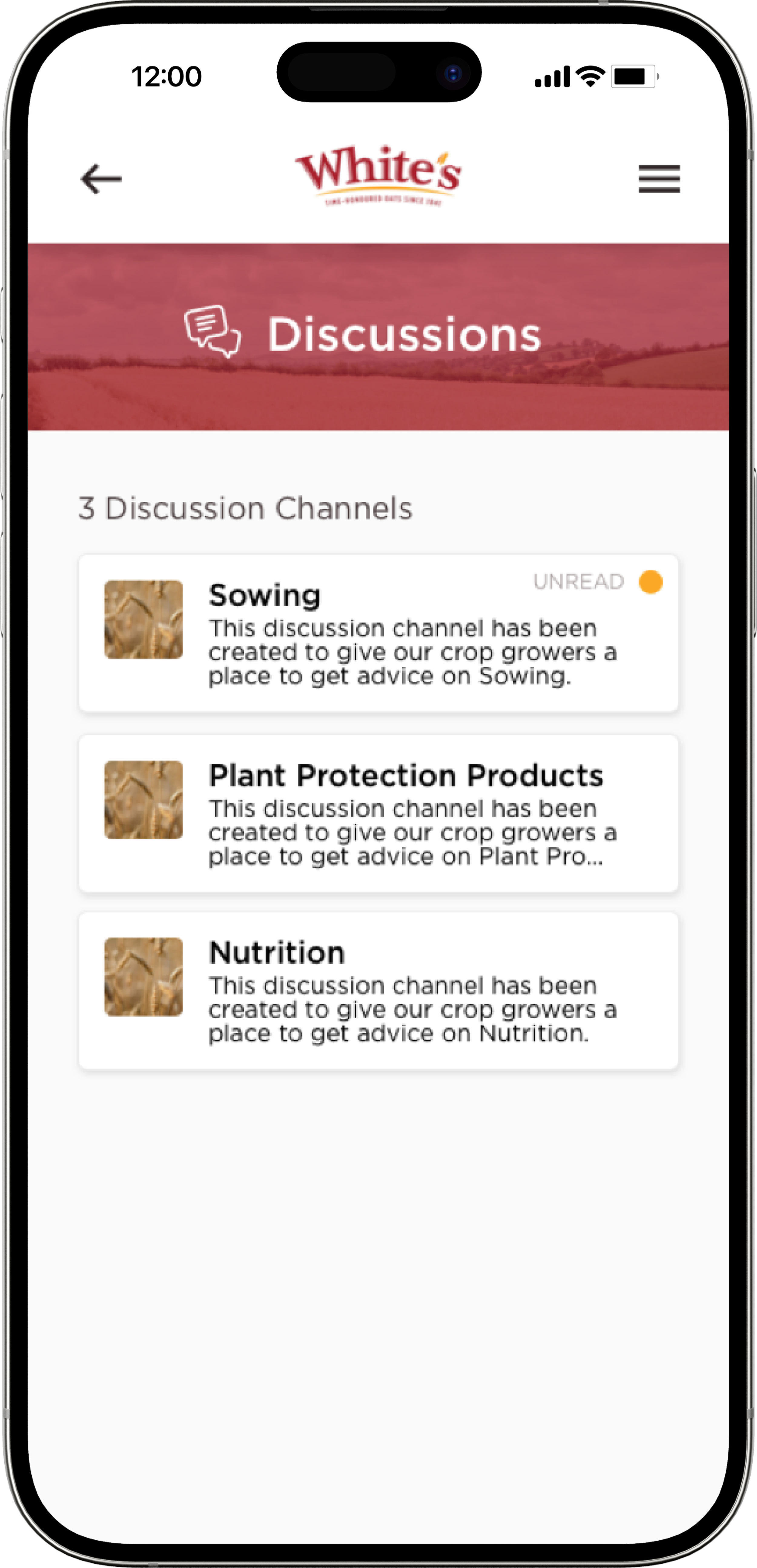
02. A grower collaboration module.
Chat-style discussions where growers can post topics, ask questions and share what's working in their fields. White's can moderate, contribute agronomy guidance, and post targeted content to specific cohorts. The platform turns informal knowledge across the network into something searchable.
-
03. An admin platform for White's Oats.
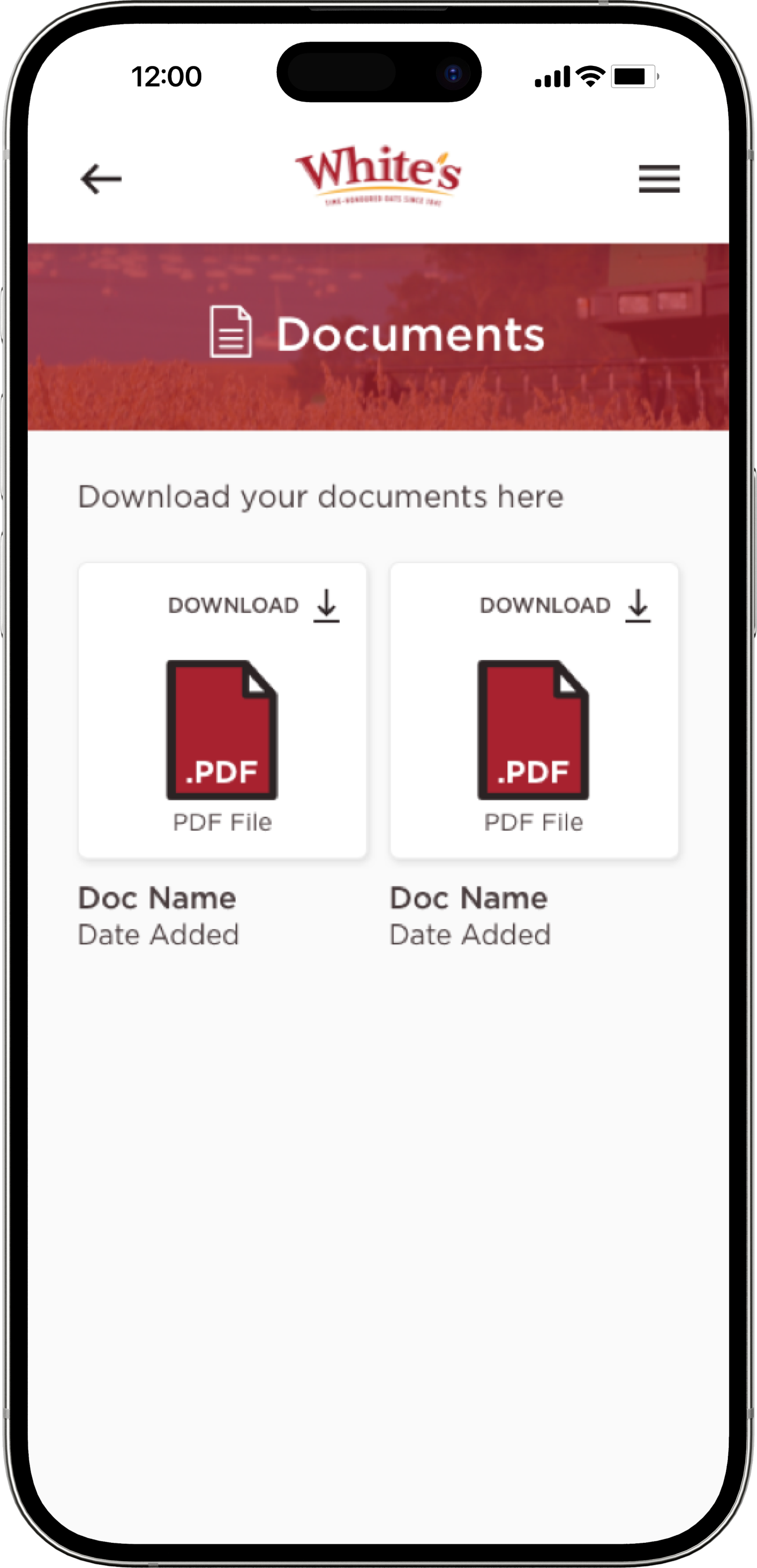
The agronomy team can view submissions across the whole grower base, filter by farmer, field or region, push notifications to specific growers or groups, and share private documentation directly with individual growers. Operational visibility that didn't exist before, on a near-real-time basis.
-
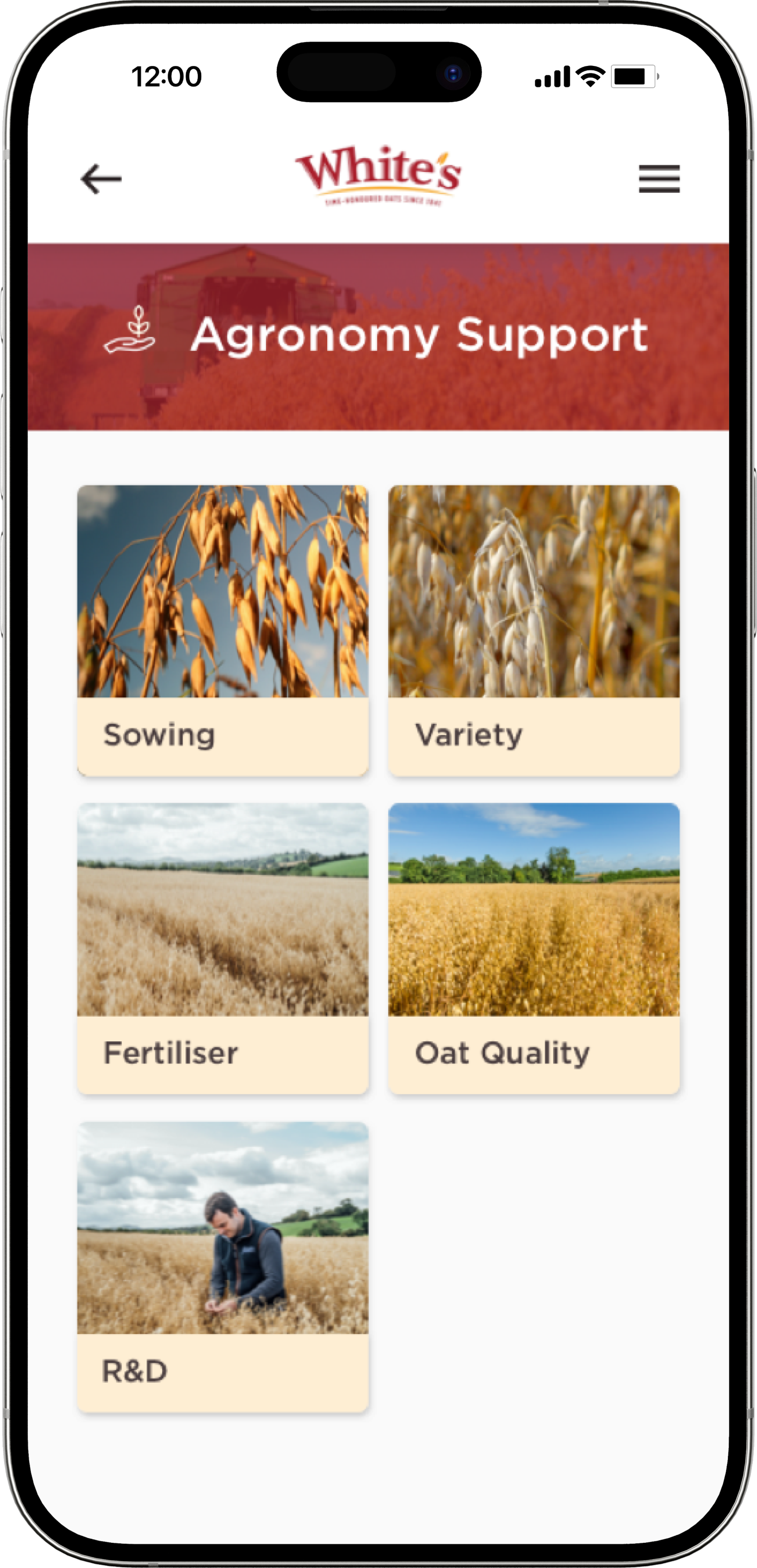
04. An agronomy resource hub.
Videos, treatment guides, quality benchmarks and PDF documentation are all accessible inside the app, available offline once downloaded. The information growers need to meet White's quality criteria is in the same place as the tools they use to record their crops.
-
05. A mobile-first interface designed for non-technical users. .
Minimal steps for data entry, clear visual prompts, an obvious offline indicator, and the kind of layout that works when you're standing in a field rather than sitting at a desk.
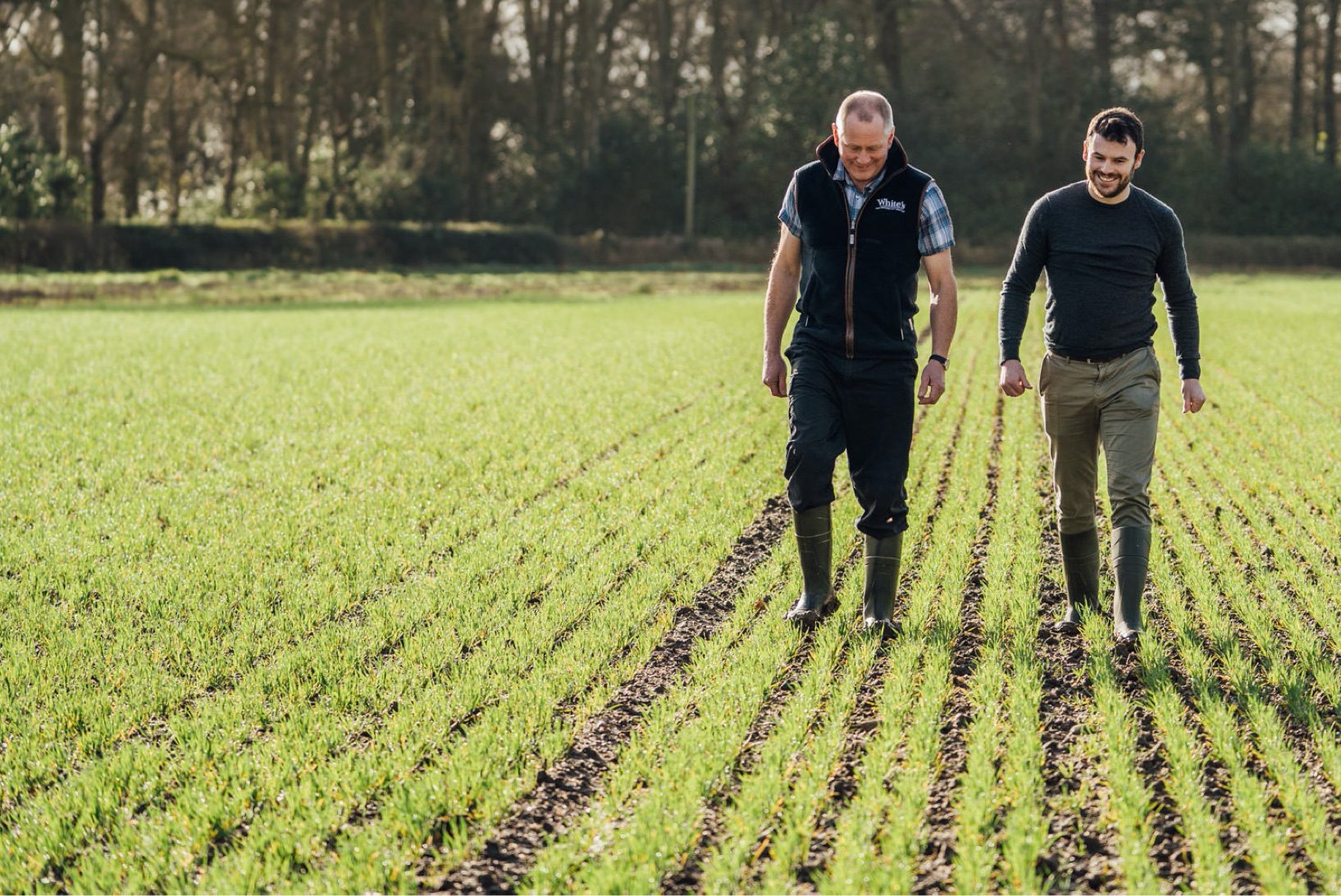

“With input from ourselves at White’s, Scaffold created us a bespoke White’s Grower’s App. It's a really great App, easy to use to update and manage. We certainly look forward to continuing using the App, and working with Scaffold for future amendments, as and when required.”
Steven McAllister / Supply Chain Co-ordinator
WHAT CHANGED
01.
Crop data now flows from field to mill the same day it's captured, including from fields with no signal
02.
White's agronomy team has near-real-time visibility of the grower base, allowing faster intervention and more targeted communication
03.
Growers are sharing knowledge with each other through the collaboration module, not just submitting data upwards
04.
The resource hub gives growers on-demand access to support content that helps reduce variation and meet mill quality expectations
05.
The platform is built to scale with the network as more growers join the Quality Oat Group, without rebuilding the underlying system
WHY IT WORKED
The Quality Oat Group now has the digital infrastructure the relationship was always built on, just on paper and in heads instead.
Software built for fieldwork tends to fail in one of two ways. It assumes a network connection that isn't there, or it assumes a level of digital fluency that doesn't reflect the people actually doing the work.
We spent the time understanding what a grower's day actually looks like. Where the data gets captured, what conditions it gets captured in, what gets in the way of recording it accurately, and what would make a grower more likely to engage with a platform than less likely. That shaped the offline behaviour, the interface, the resource library, and the decision to build for the browser rather than a native app the network would have had to install and maintain.
The result is a platform that does the unglamorous work well. It captures data the first time, works when the signal doesn't, gives the mill real visibility, and gives the network a way to share what they're learning with each other. That's why it's holding up as the Quality Oat Group continues to grow.


We build custom software to empower business success.
-
Discovery & Strategy
-
Software Development
-

Cloud Infrastructure
-

Support